Last updated November 18, 2026


Free written scope consultation - allowances, timeline, and change-order rules on paper before a single trade is scheduled
The Complete General Contractor Guide for Garland Homeowners
Garland’s building permit office runs on a different review timeline than Dallas proper, and most homeowners find that out only after they’ve signed a contract with a start date that can’t be met. That single fact has cost more Garland families money and sleep than any other part of a remodel. In this guide we’ll walk through how Garland’s permit process actually works, why the clay soil under your slab matters before you quote an interior job, what Texas law requires in your contract, and how to tell a real written bid from a “budget estimate” that shifts the moment demo begins. You’ll finish knowing exactly how to hire a general contractor in Garland without the usual surprises.
Quick Answer
Hiring a general contractor in Garland means verifying three things before you sign: a written, fixed price that holds through the project; a valid Texas license you’ve confirmed through TDLR; and a contract that meets the Texas Residential Construction Liability Act’s requirements. Then you confirm the contractor has pulled the correct Garland permits for your scope, and that they’ve looked at your foundation and soil conditions before quoting interior work. Skip any one of those and the price you agreed to is the price you might not pay.
Styles & brands we work with
- Kitchen remodeling
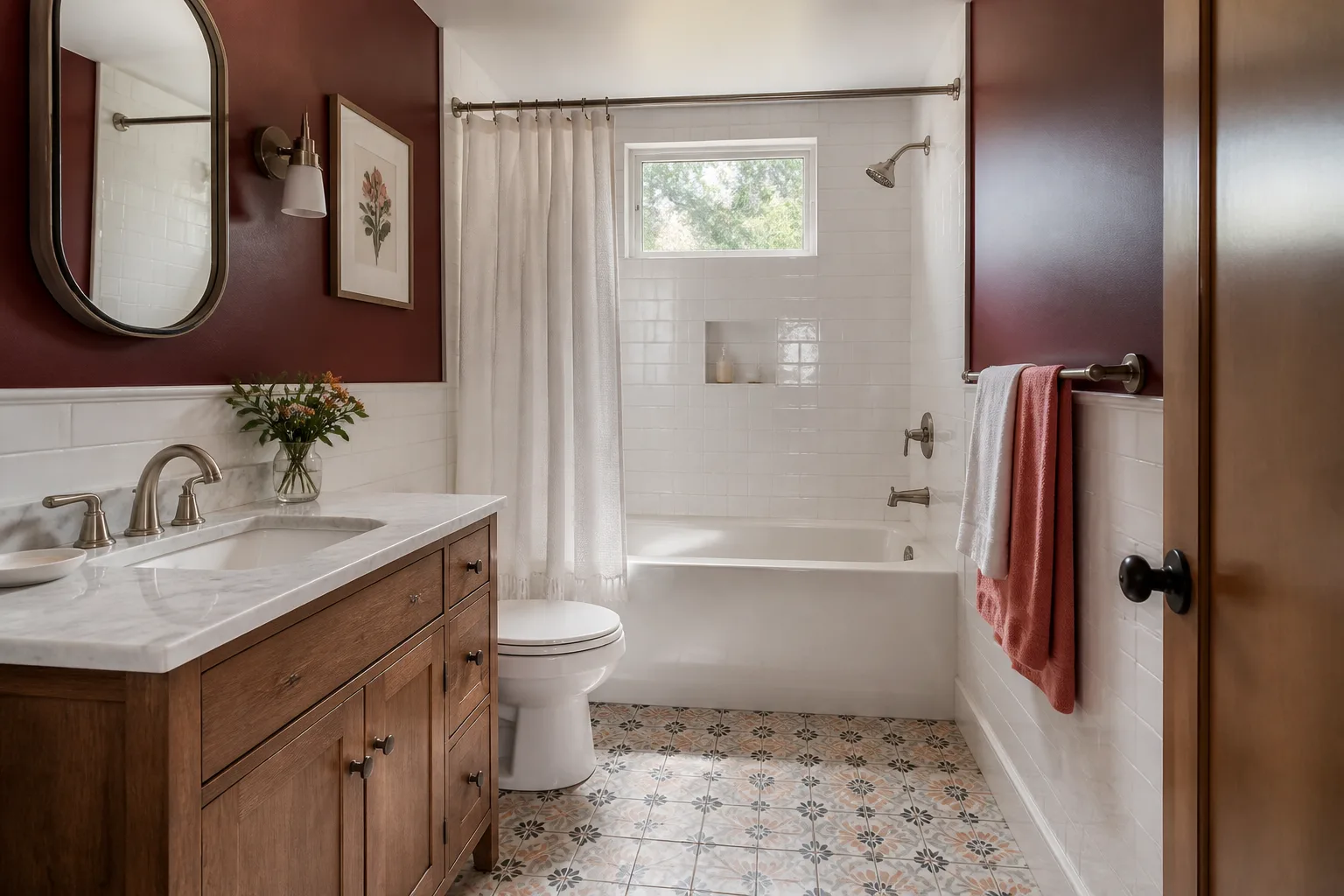
- Bathroom remodeling
- Home additions & ADU
- Roofing
- Windows & doors
- Driveway & pavers
- Fence
Table of Contents
- How Does the Garland Permit Process Actually Work?
- Why Does Garland’s Clay Soil Matter Before You Quote Interior Work?
- What Must a Written Contract Include in Texas?
- How Do You Verify a Texas Contractor License?
- Written Bid vs. Budget Estimate: What’s the Difference?
- How Do You Choose the Right GC for Your Garland Home?
- What Should a Realistic Garland Remodel Timeline Look Like?
- What Should You Expect to Pay in Garland?
How Does the Garland Permit Process Actually Work?
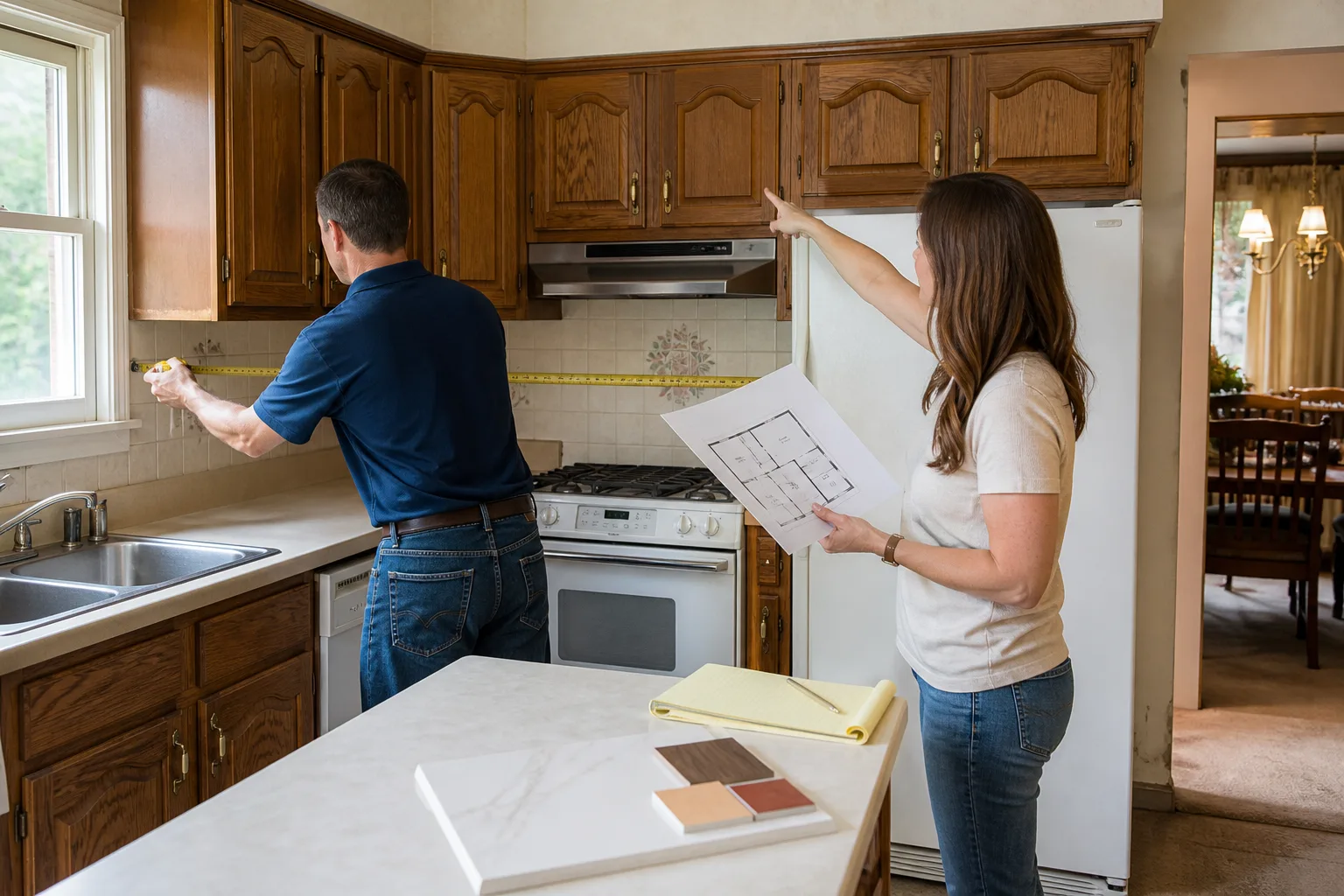
Garland issues building permits through its Development Services department, and the review calendar doesn’t line up with Dallas County’s typical turnaround. Interior remodels that move walls or add plumbing and electrical usually require a building permit; cosmetic work like paint, flooring, and cabinet swaps typically doesn’t. The catch most homeowners hit is that plan review for anything structural, plus the separate trade permits for electrical, plumbing, and mechanical, must be sequenced correctly or the whole project stalls.
The general contractor pulls the permits, not the homeowner, for projects of any real scope. That’s how it works in Garland and just about everywhere in Texas. A homeowner can pull a permit for minor work on their own property, but once you’ve hired a licensed GC, the permit is registered to the contractor of record. That matters because the inspections are tied to that permit, and unpermitted work discovered later can hold up a future sale or trigger a retroactive review.
Here’s the sequence a competent Garland GC runs:
- Confirm whether your project requires a building permit, a trade permit, or both.
- Submit plans and pay permit fees (the contractor’s cost, not an add-on).
- Schedule inspections at rough-in stages and again at final.
- Keep the permit card and inspection results on file for your records.
Every job we run in Garland starts with the permit under contract, not as a surprise line item after demo. If your contractor says “oh, we’ll just pull that later,” ask why later and not now. Call (844) 560-4146 to walk through whether your project needs a permit before you sign anything.
Why Does Garland’s Clay Soil Matter Before You Quote Interior Work?
Garland sits on the Blackland Prairie’s expansive clay soil, and that clay swells when wet and shrinks when dry. Movement of a few inches across a footing can telegraph up through a slab, crack tile, and throw a door out of square. If your contractor quotes a bathroom or kitchen remodel without ever looking at the slab, the door frames, or the exterior grading, you’re being quoted on an assumption.
In our experience, foundation-adjacent interior work in Garland needs three checks before the quote is signed:
- Slab condition: visible cracks wider than a hairline, or doors that stick seasonally, are signals to investigate further.
- Drainage and grading: soil that slopes toward the house holds moisture against the slab and accelerates movement.
- Prior repair history: a pier-and-beam repair or previous slab stabilization changes how you frame new tile, cabinets, and walls.
A responsible GC notes these conditions in the written quote. If foundation movement is significant, the right move is sometimes to address the slab before the remodel, not after. If it’s minor, the fix might be a crack-isolation membrane under tile or slightly more flexible framing. Either way, the number you get should reflect what the contractor saw. A contractor who quotes your kitchen without walking the perimeter is quoting a kitchen that might not be yours.
What Must a Written Contract Include in Texas?
The Texas Residential Construction Liability Act (RCLA) sets the ground rules for how disputes between homeowners and contractors are handled, and a written contract is central to it. A contract that doesn’t include the required elements weakens your position if something goes wrong, and may give the contractor less accountability, not more. Texas doesn’t require a single standard contract form, but a proper one for a Garland remodel should include specific language.
What your written contract needs to contain:
- Scope of work: a line-by-line description of what will be built, installed, and finished.
- Fixed price: the total cost, with any allowances for material selections spelled out.
- Payment schedule: tied to project milestones, not just calendar dates.
- Start and completion dates: a defined arrival window and target completion.
- Change order process: how scope changes are priced and approved in writing.
- Warranty terms: what’s covered, for how long, and what happens if something fails.
- Contractor identification: legal business name and contact details.
If any of those are missing, ask before you sign. Our contracts put the price and the guarantee in writing before a single cabinet is pulled or a tile is set. The 365-Day Done Right Promise, the free return visit if a repair fails, and the written price are all spelled out. If your current contractor’s paperwork feels thin, that’s information.
How Do You Verify a Texas Contractor License?
Texas doesn’t license general contractors statewide, but it does license the individual trades that do most of the actual work: electricians, plumbers, HVAC technicians, and others. The Texas Department of Licensing and Regulation (TDLR) maintains the searchable records, and this is where you verify the tradespeople on your project. A contractor who claims to be fully licensed but can’t point you to TDLR records for their electricians and plumbers is telling you something.
How to check in three steps:
- Ask for the TDLR license numbers of the tradespeople working on your job.
- Search each number on the TDLR website to confirm active status.
- Confirm the contractor carries general liability insurance and workers’ compensation, and ask for a certificate of insurance.
What happens if you skip this? Unpermitted, unlicensed work often surfaces at the worst moment: a home sale, an insurance claim, or a fire caused by an untrained electrical install. Remediation costs can run into the tens of thousands, and your homeowner’s insurance may deny a claim for unpermitted work. Hiring an unlicensed GC isn’t just a legal risk; it’s a financial one that lands on you. Our technicians are background-checked and arrive in uniform, and every job runs under a documented process. Call (844) 560-4146 to ask questions before you sign.
Written Bid vs. Budget Estimate: What’s the Difference?
A written bid is a fixed number you can hold the contractor to. A budget estimate is a range that’s explicitly designed to move. Both have a place, but only one is appropriate for signing a contract. The reason this matters in Garland right now is that material prices and labor availability have been volatile enough that some contractors use “estimates” to protect themselves, then pass the difference to you after demo.
What separates the two:
- Written bid: specific line items, fixed totals, a defined scope, allowances stated at dollar amounts, and a change-order process.
- Budget estimate: ranges that depend on final selections, a verbal walk-through, and language like “subject to change after inspection.”
If a contractor hands you an estimate with a wide range, ask them to convert it to a fixed bid before you sign. Some line items will stay as allowances (you haven’t picked cabinets yet, so the allowance covers a specific cabinet line), and that’s fine. But the total should be a number you can budget against, not a guess. The number on day one should be the number on the invoice. That’s why every Penhallow quote in Garland is written and fixed before work starts.
How Do You Choose the Right GC for Your Garland Home?
Garland’s contractor pool is deep, and the quality varies more than most homeowners expect. The right GC for your project is one who shows up to the first meeting prepared, answers your questions in plain language, and puts the number in writing before they leave. The wrong one is friendly, cheap, and vague about scope. In our experience across Garland neighborhoods, the following checklist separates them quickly.
What to ask on the first call:
- Can you give me a written, fixed price for this scope before I sign?
- Have you pulled permits for a project like this in Garland before?
- Who are the subcontractors you’ll use, and are they licensed and insured?
- What does your warranty cover, and for how long?
- Who answers the phone if I need you mid-project?
The last one matters more than homeowners realize. A live person answering the phone 24/7, without a voicemail maze or a callback window, is a standing operating standard at Penhallow Remodeling Garland. If a contractor can’t be reached during the project, they won’t be reachable after it. For a broader look at our work, see our General Contractor in Garland page, or start at our Penhallow Remodeling Garland home.
What Should a Realistic Garland Remodel Timeline Look Like?
A kitchen remodel in Garland typically runs six to ten weeks from demolition to final inspection, and a bathroom runs three to six weeks. Whole-home remodels run three to six months depending on scope. Add one to three weeks for Garland permit plan review on structural work, and you have a realistic start date. If your contractor quotes a two-week kitchen, ask what they’re leaving out.
The timeline breaks down roughly like this:
- Kitchen: demo (1-2 days), rough-in (3-5 days), cabinets and counters (7-10 days), finishes and inspection (5-7 days).
- Bathroom: demo, rough-in, waterproofing, tile, fixtures, inspection, typically four to six weeks for a full gut.
- Whole home: phased by room, with permits and inspections at each stage.
The variable that catches Garland homeowners is the permit review and inspection schedule. A contractor who plans around it keeps the project moving; one who doesn’t leaves you with a finished shell and an unpassed inspection. Every Penhallow job runs to a defined arrival window and completion target, in writing, with monthly progress communicated in plain language.
What Should You Expect to Pay in Garland?
Garland remodel pricing sits slightly below Dallas proper but above the surrounding suburbs, mostly due to labor availability and permit office turnaround. Real ranges, based on the layouts, cabinet lines, and countertop materials we see most often:
| Project Type | Typical Range | What Drives the Number |
|---|---|---|
| Bathroom remodel | $12,000 – $32,000 | Tile scope, plumbing relocation, fixture line |
| Kitchen remodel | $18,000 – $55,000 | Cabinet line, countertop material, layout changes |
| Whole-home remodel | $80,000 – $250,000+ | Square footage, scope, foundation work |
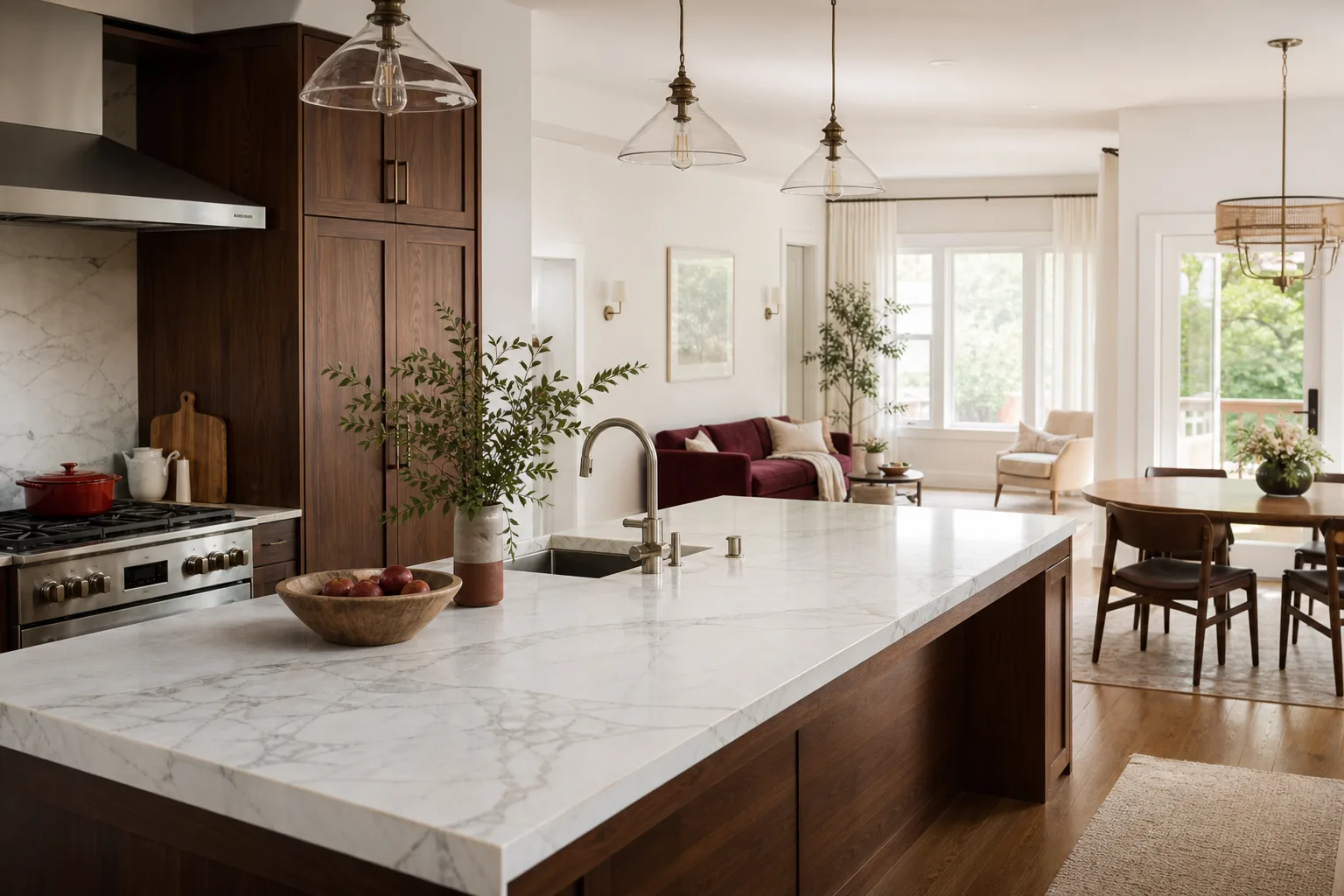
The biggest swing factors in Garland are cabinet line (KraftMaid and Wellborn land at different price points), countertop material (quartz from Cambria, Silestone, or Caesarstone versus granite), and whether layout changes trigger plumbing or electrical relocation. We install Cambria quartz, for example, which carries its own lifetime warranty alongside ours. A written quote showing line items, allowances, and fixed totals is the only way to compare bids honestly. For a deeper dive on each, see our Kitchen Remodeling in Garland and Bathroom Remodeling in Garland pages.
Common Mistakes to Avoid
- Signing before permits are pulled. In Garland, a contract with a start date that ignores plan review is a contract with a start date that will move.
- Accepting a verbal estimate. Any contractor who won’t put the number in writing before work starts will change it after demo.
- Skipping the slab check. Garland’s clay soil moves, and a bathroom remodel quoted without a foundation look is a remodel quoted on assumption.
- Not verifying trades through TDLR. Texas doesn’t license GCs statewide, but it does license the individual trades, and those records are one search away.
- Wiring a large deposit to hold a date. Payment schedules should tie to milestones, not to calendar pressure. Any countdown, any “sign today,” is a red flag.
- Choosing on price alone. The cheapest bid in Garland is often the one with the most allowances and the fewest line items, which means the highest final invoice.
- Ignoring the warranty in writing. A verbal “we stand behind it” is worth less than a written 365-Day Done Right Promise that names what’s covered and what happens if something fails.
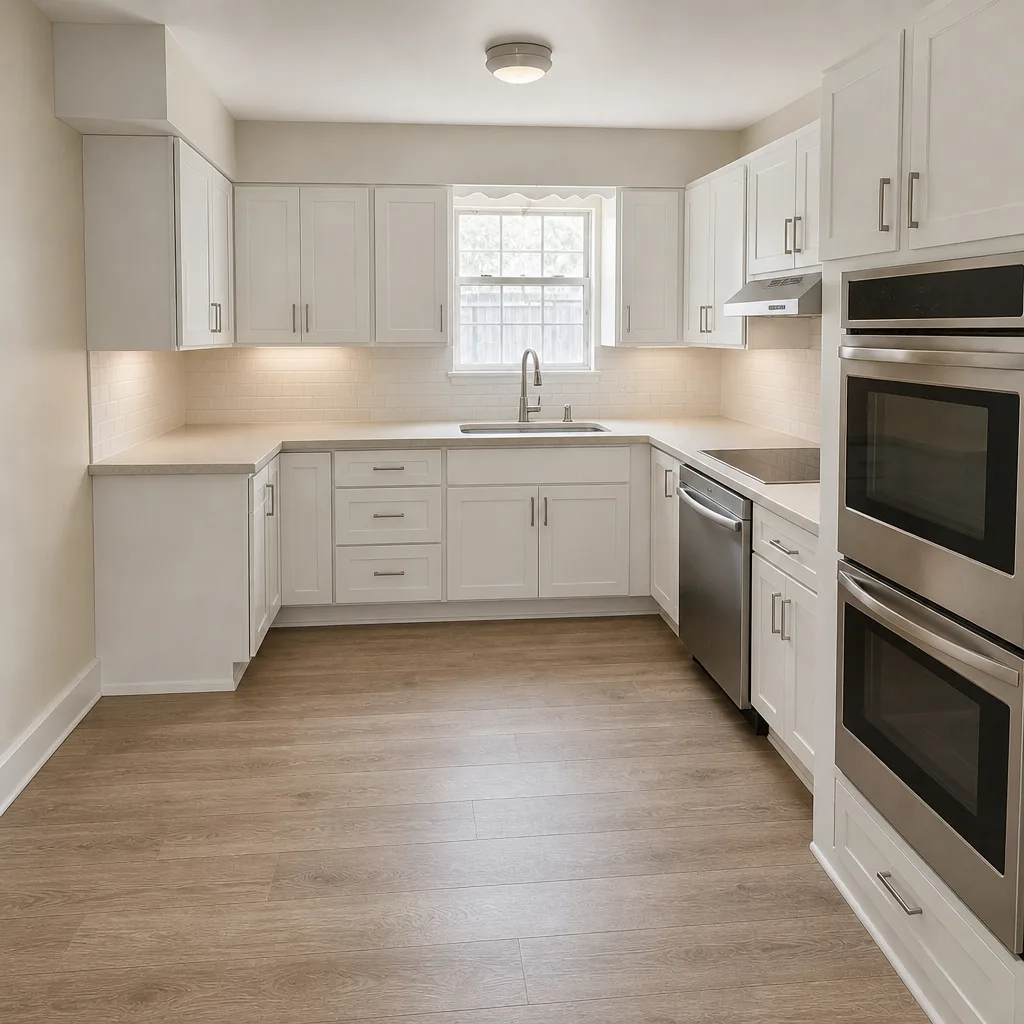
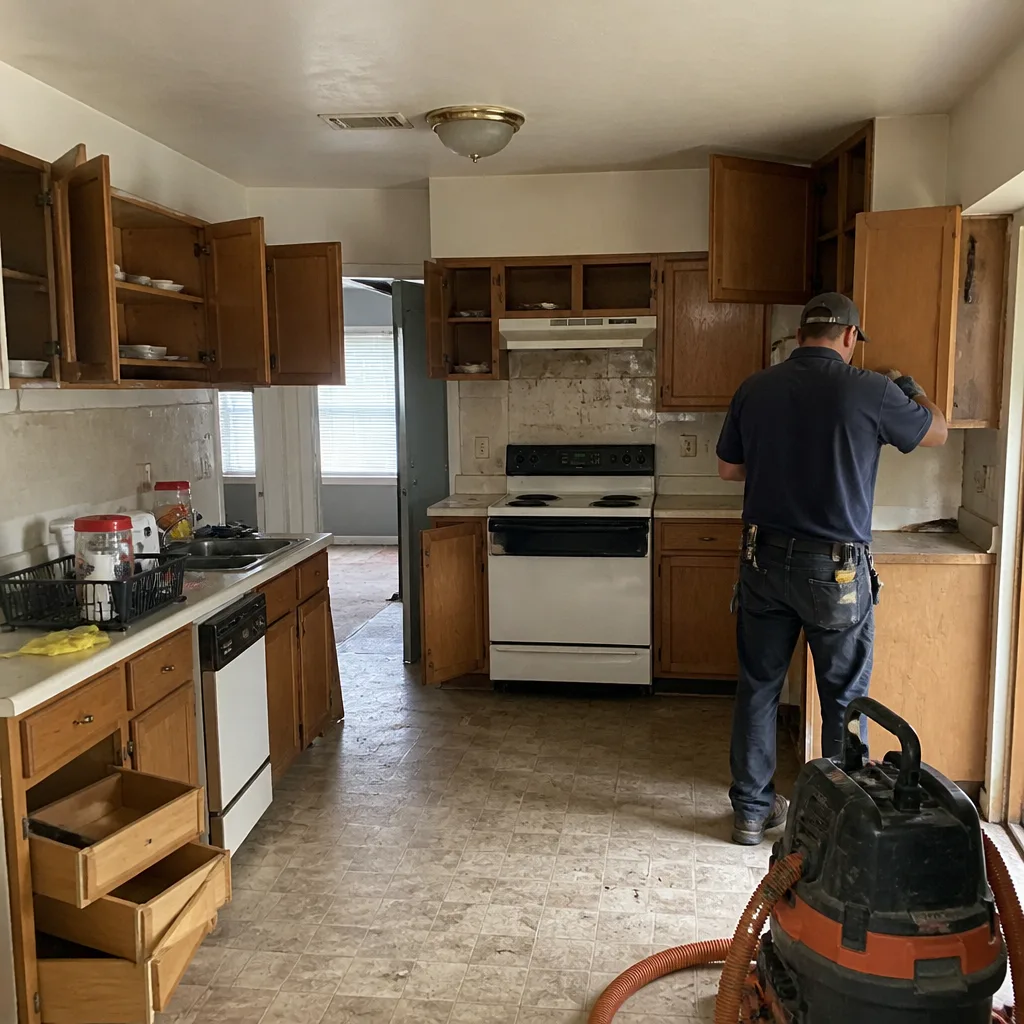
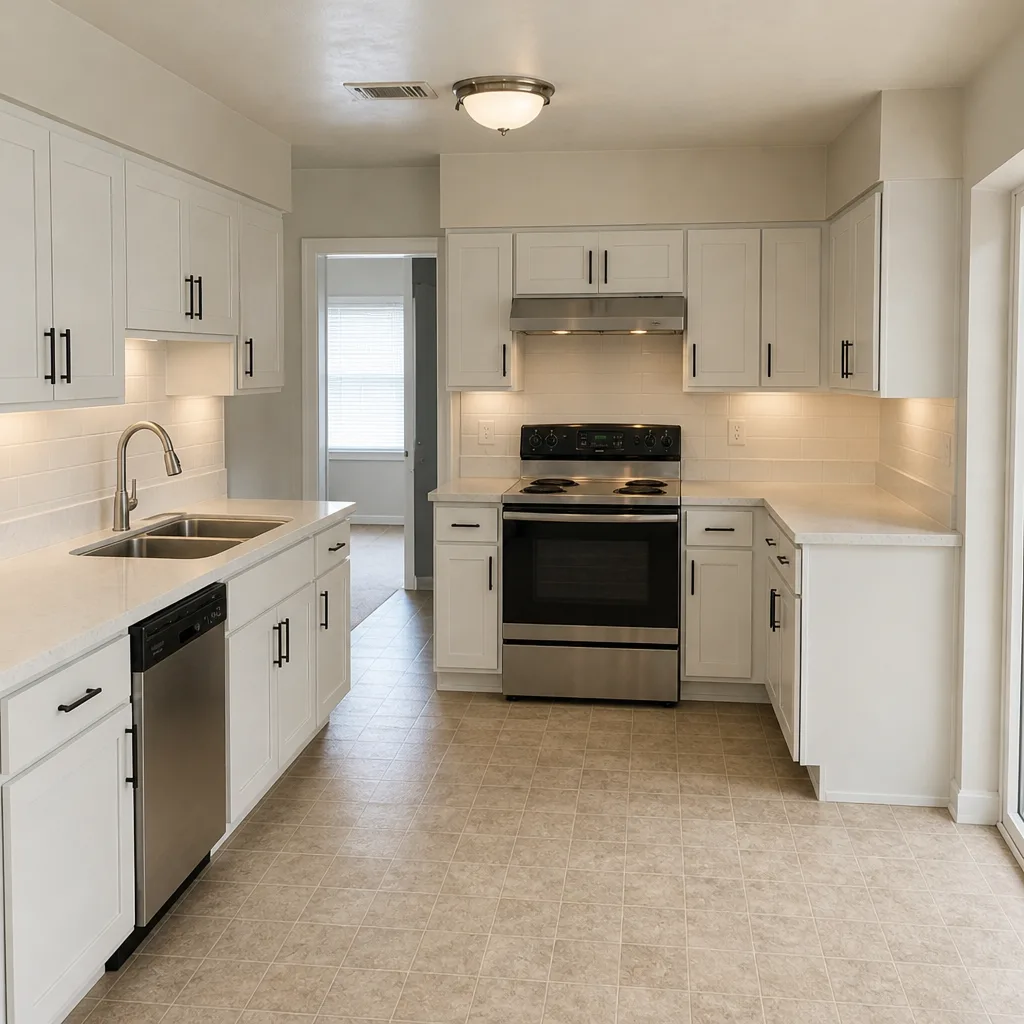
See the difference
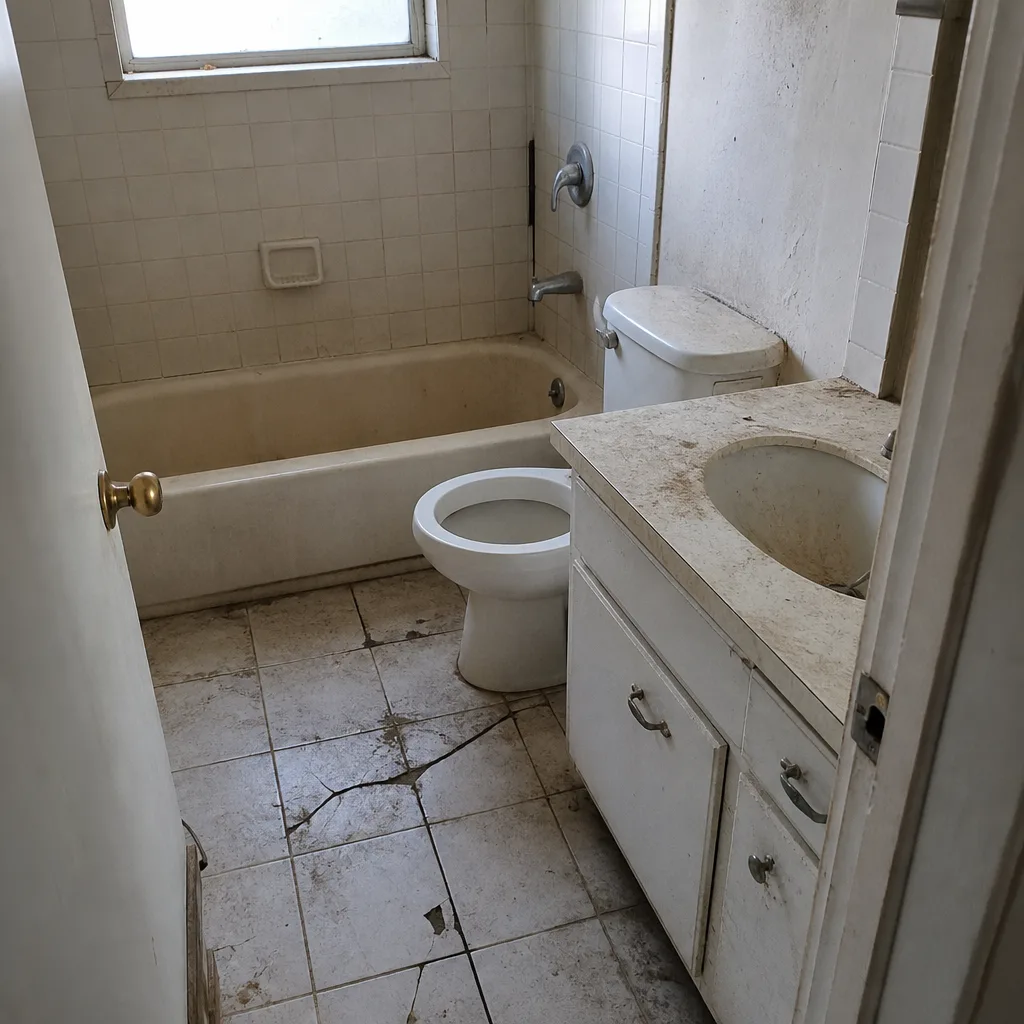 Before
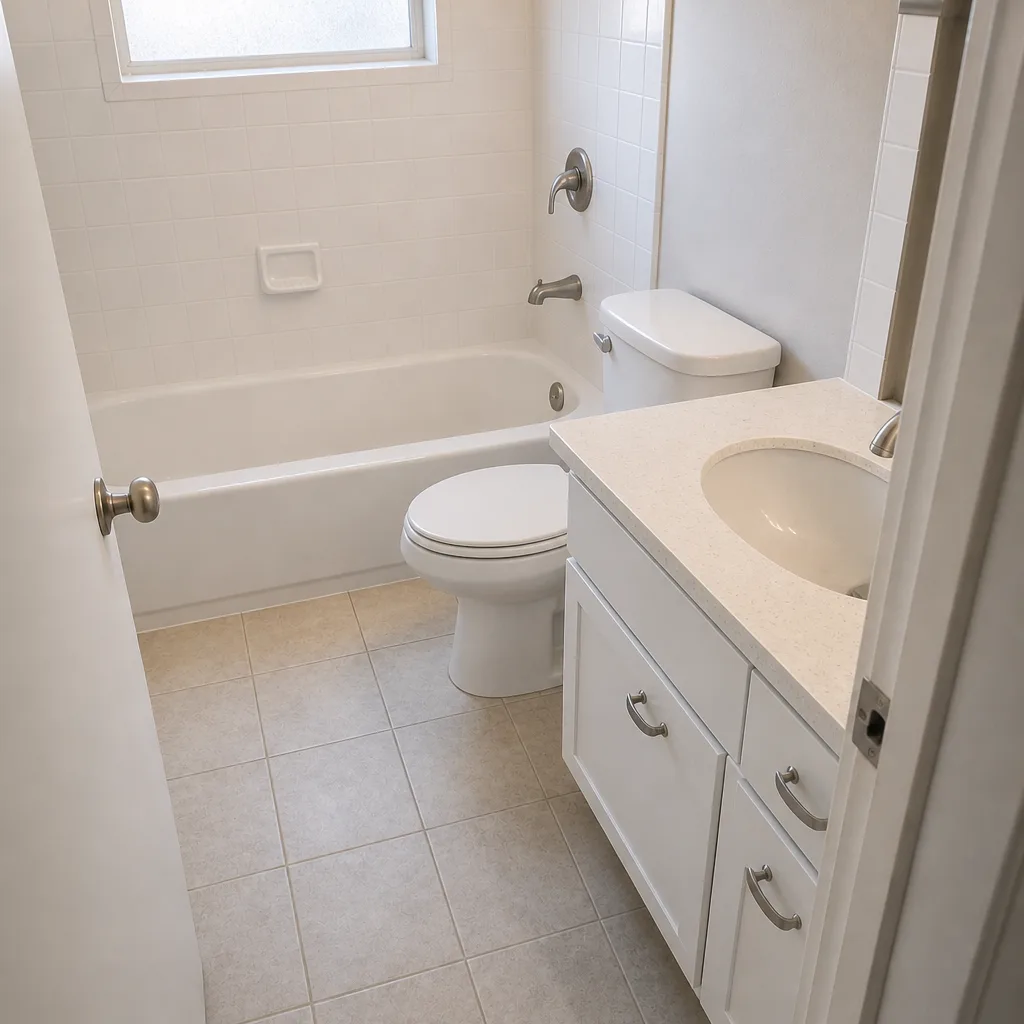 After
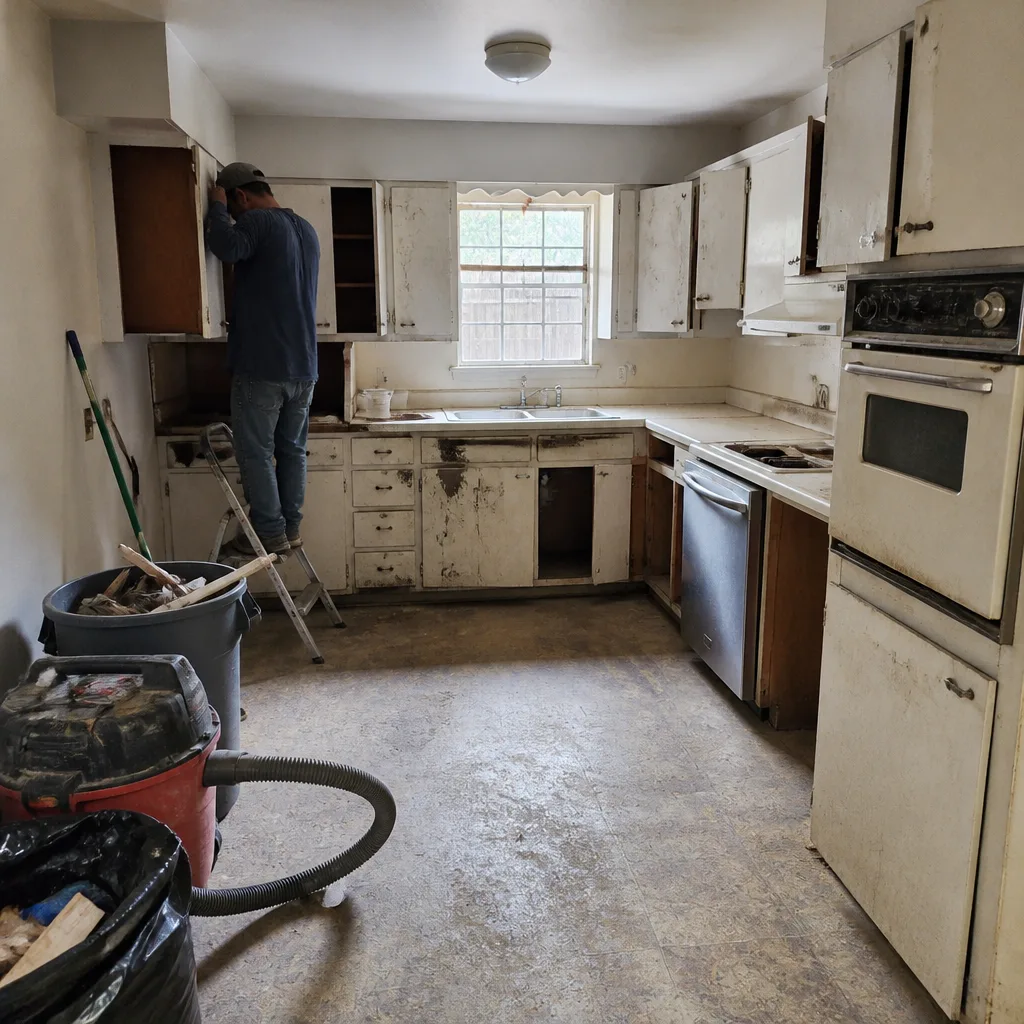 Before
 After
 Before
 After
When to Call a Professional
Call a licensed general contractor in Garland when your project involves moving walls or plumbing, adding square footage, replacing a roof, or touching the electrical panel. Those are permit-pulling, code-driven scopes that carry real financial and safety stakes. Call us sooner if you’re mid-remodel and something is going wrong: an unpassed inspection, a change-order dispute, or a contractor who’s gone quiet. At Penhallow Remodeling Garland, every project runs under a written price before work starts, and every job is covered by the 365-Day Done Right Promise. Free estimates in Garland, and a live person ready to help. Call (844) 560-4146 to schedule yours.
Frequently Asked Questions
Yes, if you’re moving plumbing, electrical, or walls. Cosmetic-only work like paint, tile replacement, and fixture swaps typically doesn’t require a permit. When in doubt, call Garland’s Development Services office and ask, or call us at (844) 560-4146 and we’ll walk through it.
GC fees in Garland typically run 10% to 20% of project cost, folded into the fixed bid rather than billed separately. A $30,000 bathroom remodel could carry $3,000 to $6,000 in GC overhead within the quoted number. Ask your contractor to break out allowances and GC margin in the written bid. Call (844) 560-4146 for a free estimate.
Search the Texas Department of Licensing and Regulation (TDLR) website using the license number your contractor provides for each trade. Texas doesn’t license general contractors statewide, so verify the electricians and plumbers on the job, and ask for a certificate of insurance. If a contractor can’t produce either, walk away.
Because a written contract is the only version of an agreement a homeowner can actually enforce. The Kingswell Guarantee, which we operate under, requires a written price before any work starts, a defined arrival window, a clean job site, and a written guarantee on every project. Call (844) 560-4146 for a free estimate.
The contractor pulls permits for any project of real scope. A homeowner may pull a minor permit directly through Garland’s Development Services, but once you’ve hired a licensed GC, they register as contractor of record and manage all inspections. Ask your contractor to confirm in the written bid.
In Garland, clay soil movement during a dry spell is common, and it can telegraph into interior work. A responsible GC checks the slab, grading, and repair history before quoting, and frames for movement during the build. If significant movement is found, we recommend addressing the foundation first. Call (844) 560-4146 for a free estimate.
The Bottom Line
Hiring a general contractor in Garland comes down to checking three things before you sign: a written, fixed price that holds through the project; a verified Texas license through TDLR for the trades on your job; and a contract that meets the RCLA’s requirements. Beyond that, a good GC checks your slab and soil before quoting, plans around Garland’s permit review timeline instead of ignoring it, and puts the warranty in writing. Get those right and the rest of the remodel is construction, not chaos. At Penhallow Remodeling Garland, we put the price and the guarantee in writing before a single cabinet is pulled or a tile is set. Give us a call at (844) 560-4146 for your free estimate, and let’s talk about what your project actually needs.
Written by the team at Penhallow Remodeling Garland.