Last updated November 18, 2026



Free written scope consultation - allowances, timeline, and change-order rules on paper before a single trade is scheduled
Home Remodeling Warning Signs Every Homeowner Should Know
The contractor who arrives on time, smiles, and shakes your hand is the one most homeowners trust on sight. But if that friendly visit ends with a verbal ballpark and a promise to “get the paperwork to you later,” your legal footing is exactly the same as with someone who showed up two hours late and talked fast. In our experience across Garland, the warning signs that actually cost people money are buried in the paperwork, or in the paperwork that never appears. This guide teaches you to read the documents before you hand over a deposit: what a real written price looks like, what a change order should contain, and how to check a contractor’s permit history in Garland before demo day.
Quick Answer
The biggest remodeling warning signs are documentary, not personal. A missing written estimate, an estimate marked “subject to change,” no license number anywhere on the paperwork, and a payment schedule not tied to completed milestones are the red flags that matter most. A written price, a defined arrival window, and a written guarantee on every project are what separate a contractor you can hold to a promise from one you can only hope does right by you.
Styles & brands we work with
- Kitchen remodeling
- Bathroom remodeling
- Home additions & ADU
- Roofing
- Windows & doors
- Driveway & pavers
- Fence
Table of Contents
- Document Red Flags to Check Before You Sign
- Behavioral Red Flags That Show Up in the Contract
- The Payment Schedule: Milestones, Not Mood
- What a Real Guarantee Looks Like in Writing
- Mid-Project Warning Signs Homeowners Miss
- How to Verify a Contractor in Garland: TDLR and Permits
- What the Garland Building Inspections Office Can Tell You
Document Red Flags to Check Before You Sign
The contract is where a remodeling project succeeds or fails. Read it the way you’d read a mortgage disclosure, because the dollar stakes are closer than most people expect. A kitchen remodel typically runs $18,000 – $55,000 depending on layout, cabinet line and countertop material, and a bathroom remodel runs $8,000 – $28,000. When that money changes hands, the paper has to be specific.
Here’s what to scan for before you sign anything, especially if you’re remodeling in an older Garland neighborhood like Forest Hills or Ridgewood Park where the housing stock dates to the 1950s and 1960s:
- No written estimate at all. A verbal number is not a price. It’s a starting point for negotiation later, and you’ll be doing the negotiating after the cabinets are already pulled.
- “Subject to change” language. An estimate with that phrase gives the contractor a legal escape hatch to the number going up. A real written price doesn’t say “subject to change” – it means the number on day one is the number on the invoice.
- No license number on the paperwork. In Texas, anyone remodeling your home as a contractor should be able to tell you their licensing status. If paperwork has no identifying number for the company, you can’t verify who you’re dealing with in a dispute.
- No defined arrival window. “We’ll get to you early next month” is not a schedule. A written arrival window is a promise you can hold a contractor to, and it’s the difference between a project you can plan around and one that hides in a text-thread.
- No written guarantee. “We stand behind our work” said out loud is legally unenforceable. If the phrase isn’t printed and signed, it doesn’t exist for the purposes of a dispute.
One thing we’ve learned in our decades in this work: homeowners who request the documents up front and ask the hard questions rarely get burned. The contractor who balks at putting the price in writing has just told you everything you need to know.
Behavioral Red Flags That Show Up in the Contract
Some warning signs look like behavior, but they almost always have a paperwork angle. When you see these moves, look for the corresponding hole in the contract:
- Asking for more than 10 – 15% upfront. On a typical Garland kitchen remodel, a deposit of $1,800 – $8,250 covers materials and sequencing. Requesting half the project cost before the first day means your cash is funding their cash flow, not your project. Ask what the deposit covers. A real contractor can itemize it.
- Cash-only payments. No paper trail means no warranty enforcement. If your written guarantee depends on being able to show you paid for the work, cash-only payments work against you. Legitimate contractors accept check, card, or bank transfer and provide a receipt.
- “You pull the permit.” A contractor who suggests you handle the permitting is handing you the legal liability for the job. In Garland, the permitting process is the contractor’s job, not yours. If they won’t own it, walk.
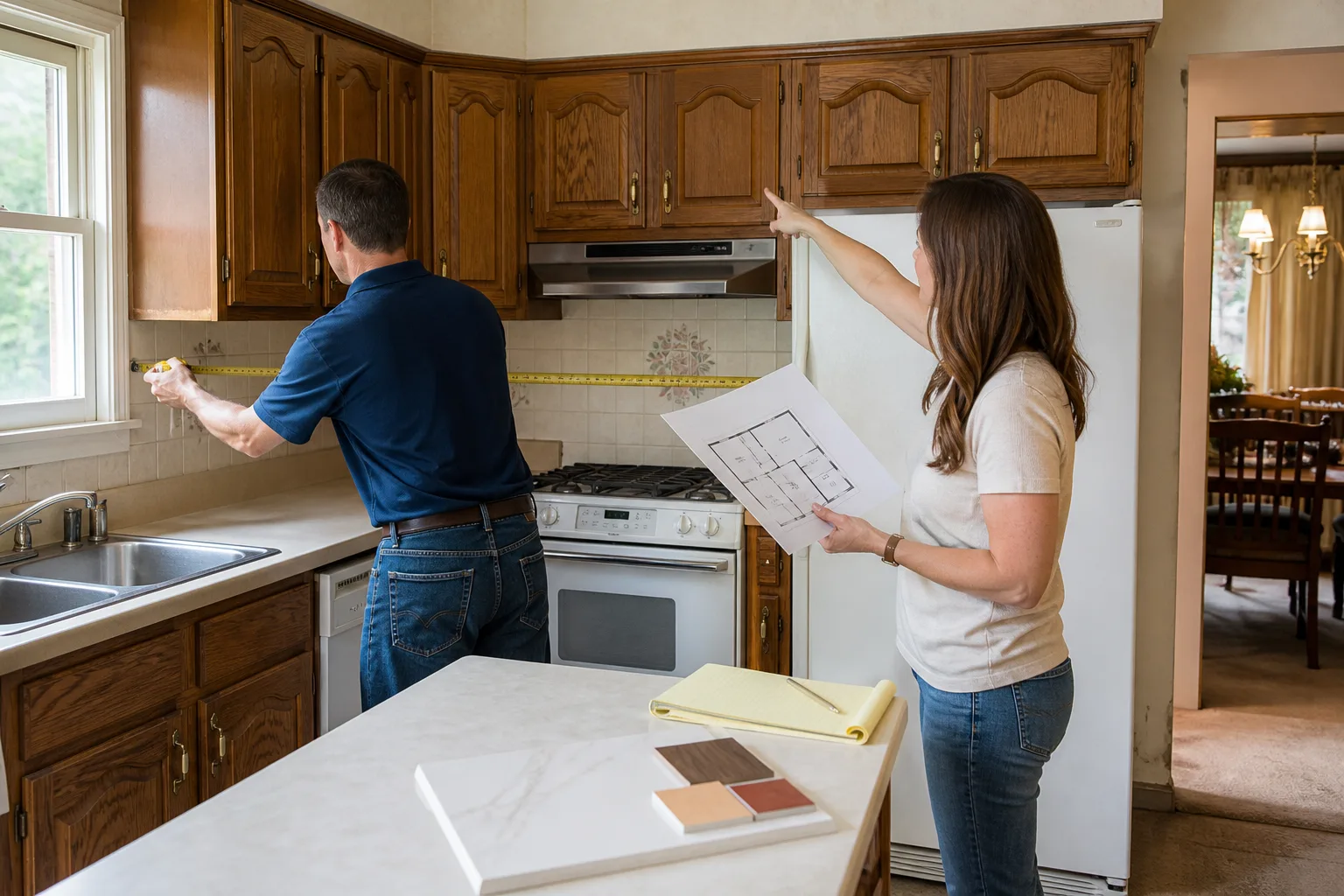
- Estimates that arrive as a text photo of a napkin. We’ve seen this multiple times in Garland – a homeowner with a scribbled bid, no scope, no line items, and a price. A written estimate should break down what’s being done, what’s being purchased, and what happens if something goes wrong.
- Eagerness to skip the second visit. A contractor who wants to price from the driveway is guessing. Accurate pricing for a Garland bathroom remodel comes from confirming whether the subfloor is solid and any old cast-iron plumbing needs rework, and those things get checked in person.
The Payment Schedule: Milestones, Not Mood
A payment schedule tied to milestones protects you. A payment schedule tied to “when we get to it” or “when the materials ship” does not. Here’s how a defensible schedule works on a Garland kitchen remodel:
- Deposit on signing: 10 – 15% of the project total, held against material orders and scheduling.
- Rough-in completion: paid when framing, plumbing, and electrical are signed off by inspection, not when the crew says they’re “done underneath.”
- Substantial completion: paid when cabinets, countertops, and flooring are installed and accepted by you, walkthrough included.
- Final payment: paid after a walkthrough confirms the punch list is closed and the written guarantee is in your hands.
What you’re looking for is a symmetry between the money you’re paying and the work you can see. A written price up front fits that schedule naturally: every draw is a check against a number that was fixed on day one, not a check against a new invoice the contractor generated overnight. We’ve seen too many Garland homeowners pay the third draw on a project that’s a hundred percent done on paper and fifty percent done on the floor. Ask for the milestone schedule in writing, and add it to the contract if it isn’t there.
If your project is part of a larger whole-home scope, the same milestone logic applies across each phase. Feel free to read more about how we structure larger jobs on our general contractor in Garland page.
What a Real Guarantee Looks Like in Writing
Here’s where the gap between spoken and written promises matters most. “We stand behind our work” said across a counter is legally unenforceable. A written guarantee names the duration, names what’s covered, names what’s excluded, and names who does the fixing. That’s the difference between a promise and a warranty.
At Penhallow Remodeling Garland, every project carries our 365-Day Done Right Promise: if the work fails inside that year, we come back and fix it at no charge. That’s not a slogan; it’s printed, signed, and included with every job, because it belongs in the same stack of paper as the price. The layers matter, too. When we install Cambria quartz, for example, the material carries its own manufacturer warranty alongside ours, so the protection runs deeper than the labor. That’s why we name the brands we install – Kohler fixtures, Cambria and Silestone tops – the products behind the guarantee back it up.
A legitimate guarantee also specifies the failure case: what happens, who gets called, and how fast. Ours includes a free return visit if a repair fails – no service call fee, no re-inspection charge. If the contractor you’re interviewing can’t put their guarantee in writing, with terms, then their guarantee is not a guarantee. It’s a habit of speech.
For more on our specific approach to full-scope remodels, see our guide to kitchen remodeling in Garland.
Mid-Project Warning Signs Homeowners Miss
The most overlooked red flags arrive mid-project, after trust has already formed. They’re subtle because they look like normal construction chaos. Here’s what actually warrants a pause:
- Change orders that live in a text thread. A change without a written change order means no agreement on price or scope. When the invoice arrives, the benefit of the doubt will not be in your favor. Every change, no matter how small, should land in a signed document before the work happens.
- Subcontractors who don’t know the scope. When the tile setter arrives and asks what pattern you chose, the communication problem is upstream. The general contractor should have a written scope every trade works from.
- A crew that changes the schedule without a new date in writing. A schedule slip is normal. A schedule slip that never gets rewritten is a project going sideways.
- No paper trail for materials. If you were promised Cambria countertops and the installers show up with an unmarked slab, ask for the material documentation. The paperwork should name the product.
- No permit posted. In Garland, a remodel that requires a permit should have one visibly on site. A missing permit card is the most telltale mid-project warning sign and one our Garland team sees regularly with subcontracted jobs.
We’ve seen this pattern repeatedly in Garland’s older neighborhoods: work gets done beautifully, then fails a year later because the permit process was skipped and an inspection would have caught a missing moisture barrier. That’s the moment the guarantee earns its keep.
How to Verify a Contractor in Garland: TDLR and Permits
Texas doesn’t issue a single statewide general contractor license, but TDLR (the Texas Department of Licensing and Regulation) does license specific trades like electricians, plumbers, and air conditioning contractors. If your GC is using a licensed plumber or electrician, that sub’s license number should be available and verifiable at tdlr.texas.gov. It takes minutes. Ask for the number, look it up, move on.
For the general contractor himself, do two more checks before you sign anything, and this is where Garland homeowners get the most mileage:
- Ask for a written scope and price. No written estimate, no signature. If they won’t put it in writing, you have your answer.
- Ask for their permit history in Garland. A legitimate contractor can tell you how they pull permits and, often, can show you which of their projects have been inspected and passed. Ours can.
- Ask for the insurer’s name and certificate of insurance. A phone call to the insurer verifies the coverage is active. It’s a two-minute call and it protects you from liability if a worker is injured on your property.
Verify the person doing the work, not just the company name on the truck. We’ve seen homeowners hire a friendly face and discover after demo that the paperwork was in someone else’s name.
What the Garland Building Inspections Office Can Tell You
Garland Building Inspections can confirm whether a permit was pulled for a specific address and whether the required inspections passed. If you’re buying a house in Garland with recent remodeling, ask the seller or the contractor for the permit record before you close. A finished basement that was never inspected, an added bathroom with no permit, a kitchen reconfigured without a rough-in inspection – those are problems you inherit.
If a contractor tells you that you “don’t need a permit for that,” ask which part of the Garland code excludes it. The honest answer usually sounds like “we should pull a permit and I’ll handle it.” We’ve seen plenty of Garland remodels in older homes where the structural changes and electrical moves would have required inspections, and skipping that paperwork is invisible until the next buyer checks. A permit record also becomes your proof of quality at resale. Pulling permits and passing inspections is one of the quiet ways good work shows its paper trail.
Common Mistakes to Avoid
- Signing a range with no ceiling. “Somewhere between $20,000 and $40,000” is not a price. Get a fixed written number with line items before the deposit goes out.
- Paying the second draw on a verbal status. Pay only against milestones you can see or verify with an inspection.
- Accepting a guarantee that lives only in conversation. A guarantee written on the contract is enforceable and a guarantee spoken across the counter is not.
- Letting a change order ride on a text. Every change goes in a signed paper trail, even if it’s a $300 swap.
- Skipping the TDLR check because “the guy seems great.” The friendly ones are the ones homeowners forget to verify. Takes two minutes.
- Assuming the permit is handled. In Garland, confirm the permit was pulled and the inspection happened. The paper trail protects you at resale.
- Ignoring the “subject to change” line in an estimate. That phrase is the single most expensive sentence in remodeling.
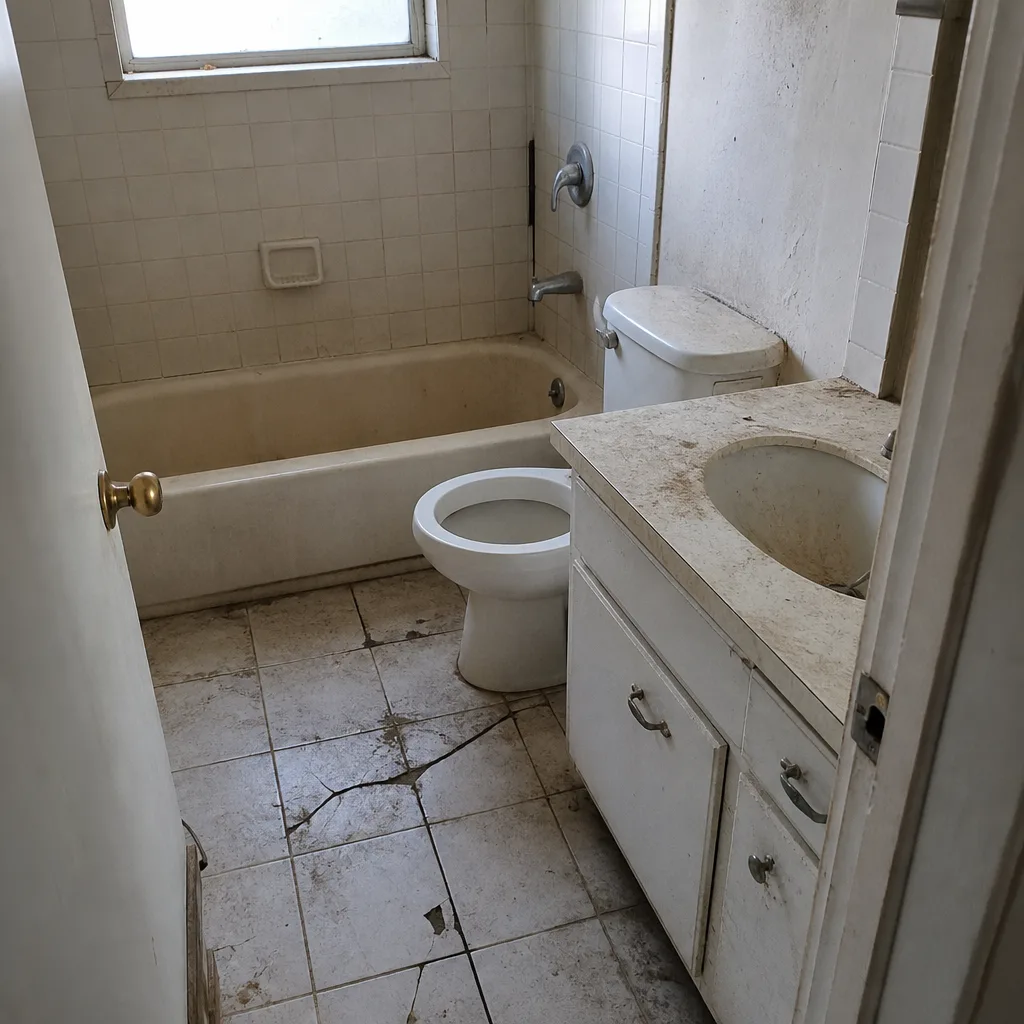
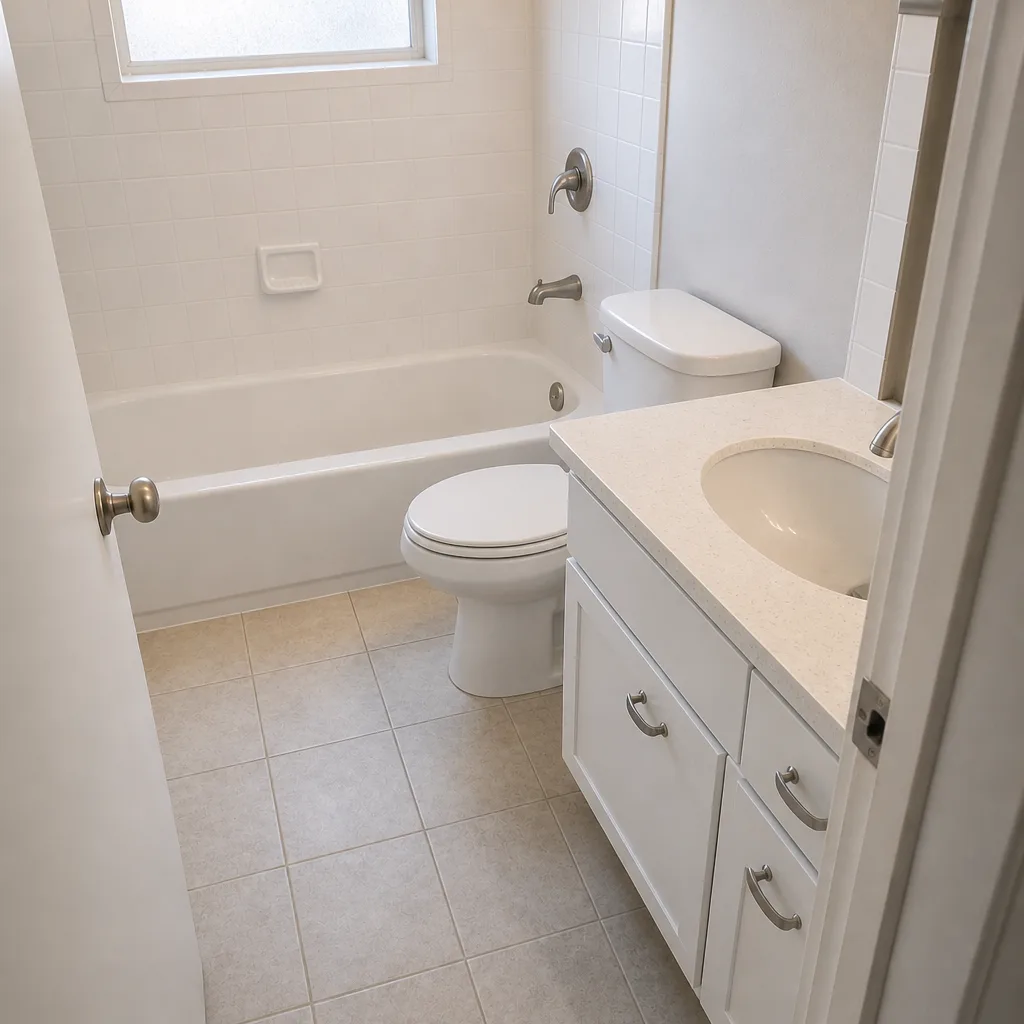
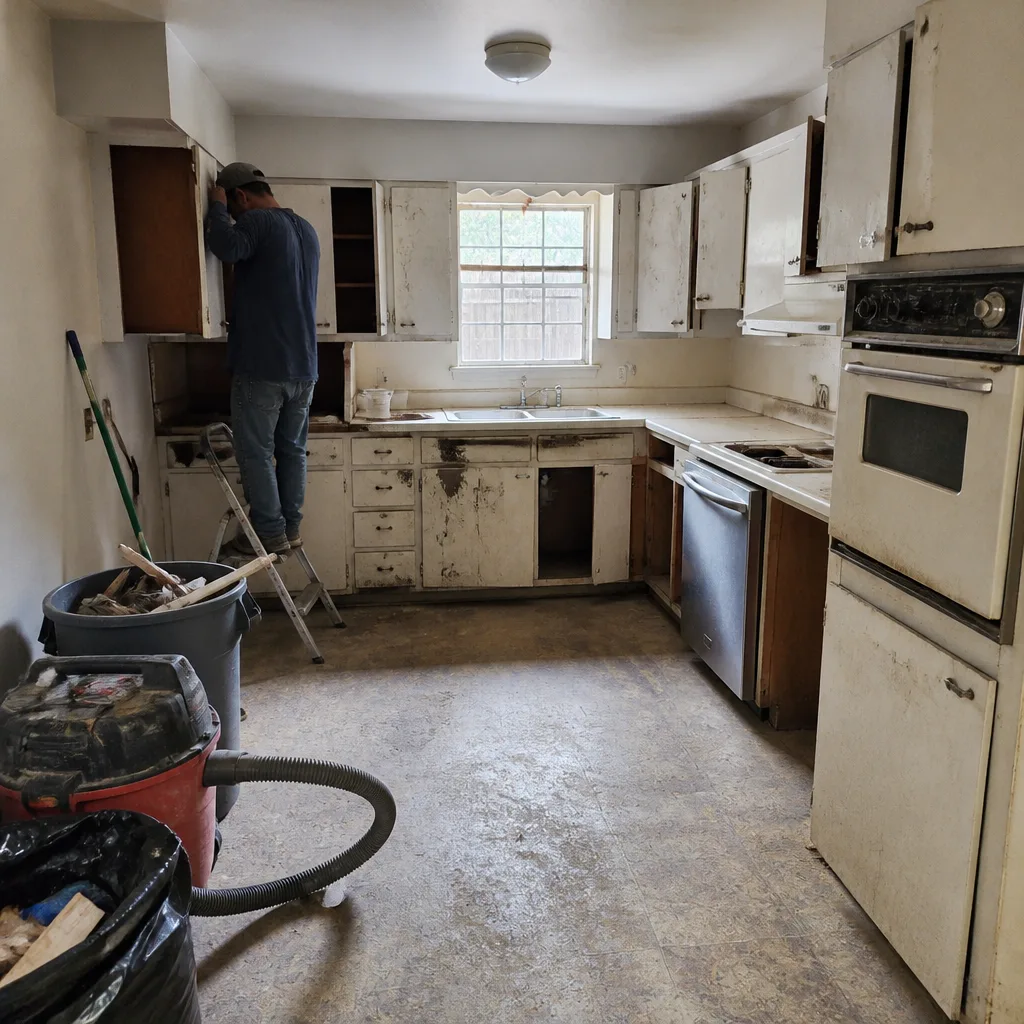
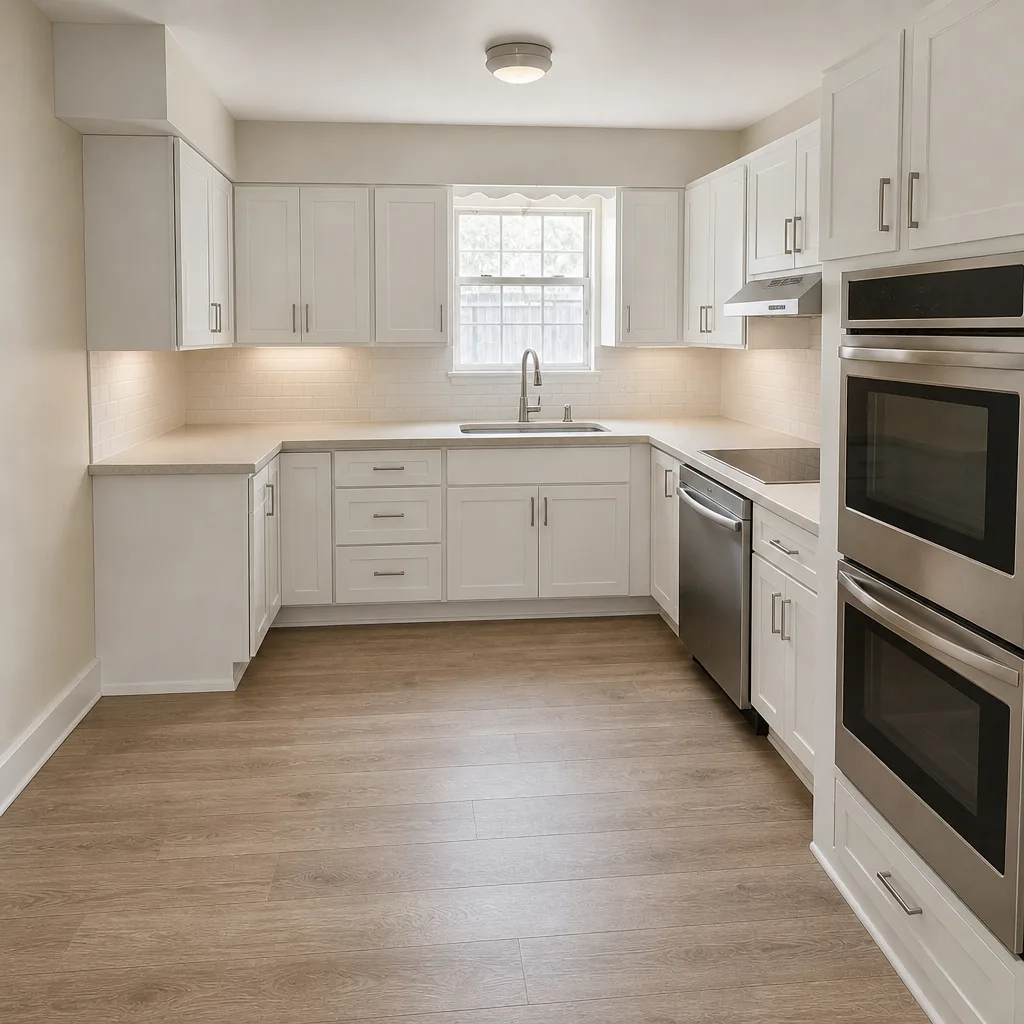
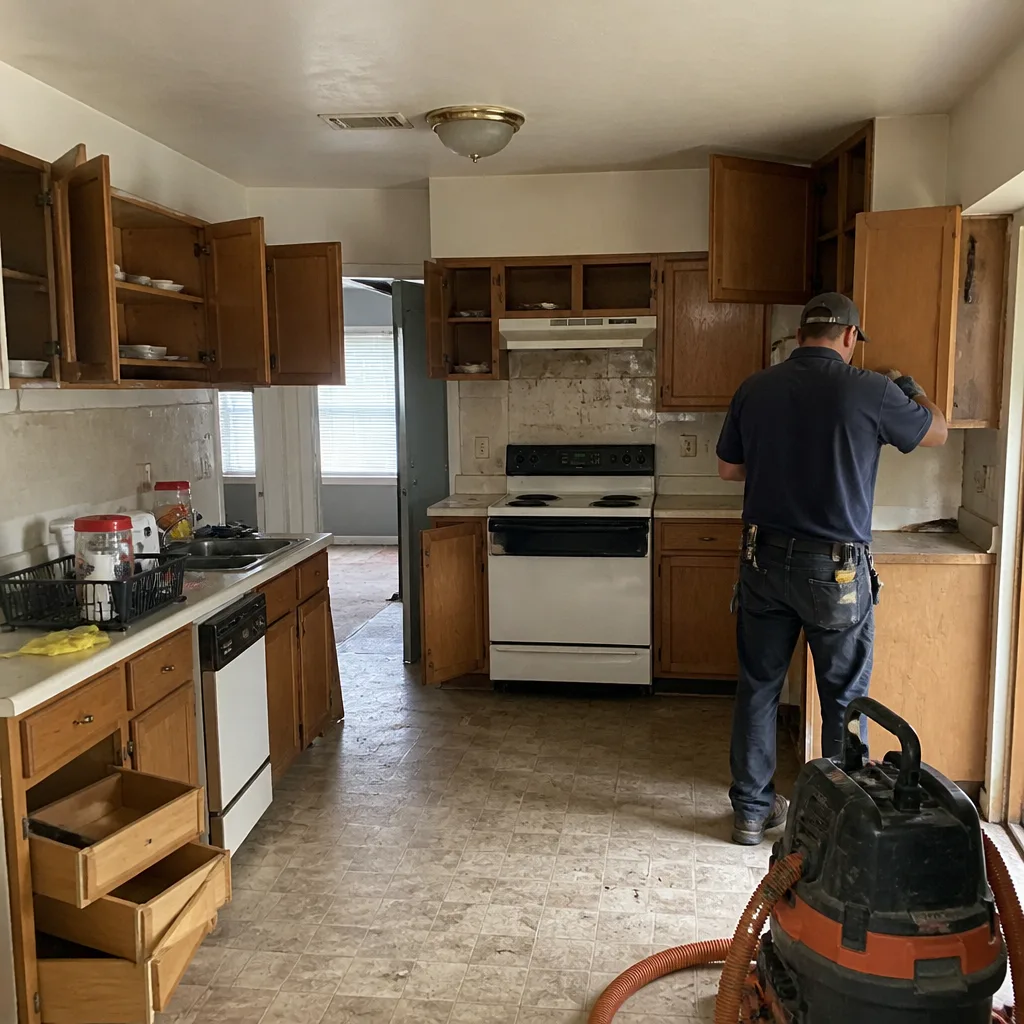
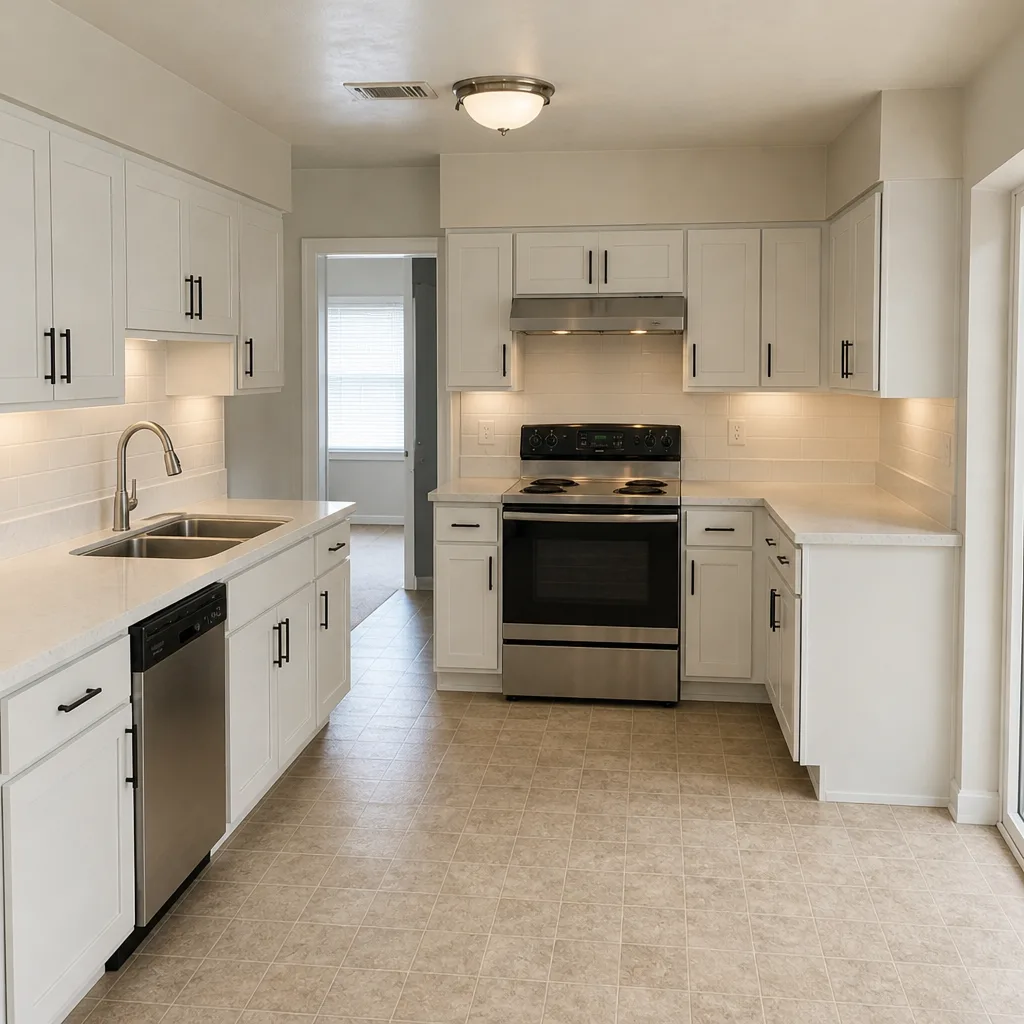
See the difference
 Before
 After
 Before
 After
 Before
 After
When to Call a Professional
Call a professional when the scope involves moving walls, changing plumbing, or bringing an older Garland home up to current code – those are the jobs where the paperwork risk is highest and the cost of a mistake is measured in five figures. Also call when you’ve been given a verbal estimate and something about it feels thin, or when a contractor can’t answer where the permits will be pulled. We’re glad to look over a contract you’ve been handed and give you a straight read on it. Penhallow Remodeling Garland offers free estimates in Garland. Call (844) 560-4146 to schedule yours.
Our team can also walk you through a bathroom scope with the same document-first approach. See our bathroom remodeling in Garland page for what that looks like in practice.
Frequently Asked Questions
A written remodeling estimate should be free. Any contractor who charges for a bid is telling you that their time is more valuable than your trust. In Garland, a kitchen remodel typically runs $18,000 – $55,000 and a bathroom $8,000 – $28,000, so the estimate conversation is worth having in writing. Call (844) 560-4146 for a free written estimate – the number is yours to keep either way.
Not if it’s written correctly. Our standard is a written price before any work starts, and the number on day one is the number on the invoice. Prices only change when you approve a written change order, and only for the scope you sign off on. Call (844) 560-4146 to see what that looks like on your project.
Yes. We pull the permits and we schedule the inspections. Permits are our responsibility, not yours – and we’ll show you the record so you can confirm the work passed. Never accept a remodeling contract where the permit is left to the homeowner. Call (844) 560-4146 for a free estimate and we’ll walk you through the permitting for your address.
It covers failures in the work we performed for 365 days from project completion. If something we installed fails inside that period, we come back and fix it at no charge – a free return visit, no service call fee, no re-inspection charge. It’s backed in writing on every project, and the manufacturer warranties on products like Kohler fixtures and Cambria quartz run alongside it. Call (844) 560-4146 with questions about your specific scope.
Ask for three things: the TDLR license number for any licensed trade sub, a certificate of insurance with the insurer’s contact info, and a written scope and price. Look up the TDLR number at tdlr.texas.gov, call the insurer, and read the contract line by line. Then call the Garland Building Inspections office to confirm permit history if you want the deepest check. Call (844) 560-4146 if you’d like a second set of eyes on a contract before you sign.
A typical Garland kitchen remodel with new cabinets, countertops, and flooring runs 6 – 10 weeks from demo to final walkthrough. The exact schedule depends on custom cabinet lead times for KraftMaid and Wellborn lines and on whether the layout changes require new plumbing or electrical rough-ins. We put the schedule in writing with a defined arrival window, so you can plan around the work. Call (844) 560-4146 to talk through your timeline.
You can always start with our Penhallow Remodeling Garland home page to see how we approach projects from the first visit.
The Bottom Line
The remodeling warning signs that cost you money rarely announce themselves with attitude. They live in paperwork: no written price, a range marked “subject to change,” no license number on the contract, a payment schedule not tied to milestones, a guarantee that exists only in conversation. Read the documents before you sign the check. Verify the TDLR license, confirm the permit history in Garland, and insist on a written price and a written guarantee from any contractor you hire. When those pieces are in writing, the friendly contractor and the competent contractor are the same person, and your legal footing matches your trust. If you want to see what that paperwork looks like in practice, our general contractor page walks through the process from first visit to final walkthrough.
Whether you’re planning a kitchen remodel, a bathroom remodel, or a larger whole-home scope, we’re glad to sit down, put the price in writing, and answer every question before you commit. The technicians we work with bring up to 22 years of experience, every one is background-checked and arrives in uniform, and a live person answers our phone 24/7 – not an answering service, not a voicemail prompt. Call Penhallow Remodeling Garland at (844) 560-4146 to schedule your free estimate, and we’ll show you the paperwork before we show you a hammer.
Written by the team at Penhallow Remodeling Garland.