Last updated November 18, 2026





Free written scope consultation - allowances, timeline, and change-order rules on paper before a single trade is scheduled
DIY vs Professional Home Remodeling: What’s Safe to Do Yourself
A YouTube tutorial can teach you to tile a backsplash. It won’t tell you that an improperly waterproofed shower pan, something you can’t even see once the tile is set, causes mold that averages $2,300 to remediate in North Texas homes. That gap between what you can watch and what you can foresee is where the real DIY decision lives. This guide draws the line by consequence, not by confidence: which mistakes you can sand down and which ones live inside your walls for decades. We’ve watched plenty of Garland homeowners learn this the hard way, and we’d rather you didn’t.
Quick Answer
Cosmetic work you can see and reach is generally safe to DIY: painting, swapping cabinet hardware, re-caulking tubs and sinks, replacing a faucet or light fixture on an existing circuit. Anything that touches structure, waterproofing, gas, or permitted electrical and plumbing work is not, because a failure there is expensive to reverse and often invisible until it’s caused real damage. In Garland, permitted work also creates a paperwork trail that a resale or insurance claim will eventually require.
Styles & brands we work with
- Kitchen remodeling
- Bathroom remodeling
- Home additions & ADU
- Roofing
- Windows & doors
- Driveway & pavers
- Fence
Table of Contents
- The Real Question: Consequence of Failure, Not Difficulty
- Three Tiers of Remodeling Work: Cosmetic, Structural, Code-Required
- What Garland Permit Offices Require a Licensed Contractor For
- The Hidden Cost of Undoing a DIY Mistake
- Three Genuinely Safe DIY Categories (With Honest Skill Benchmarks)
- What a Written Quote Tells You That a Materials Estimate Never Will
- Bathrooms and Kitchens: Where DIY Usually Goes Wrong
- Common Mistakes to Avoid
The Real Question: Consequence of Failure, Not Difficulty
Most DIY-versus-pro advice sorts tasks by how hard they look. That’s the wrong sort. A task can be simple and still ruinous. Hanging a bathroom exhaust fan is a moderate job; venting it into the attic instead of through the roof feeds warm, wet air into a space that has no business holding moisture, and in a Garland summer that attic becomes a mold incubator. Meanwhile, tearing out a vanity and replacing it with a like-for-like unit is physically demanding but nearly impossible to get structurally wrong.
So the question we ask a homeowner isn’t “can you do this?” It’s “what happens in five years if this was done wrong?” Three things push a job across the line:
- Reversibility. Paint sands off. A cracked tile gets replaced. But a shower pan built without a proper sloped pre-pan and a continuous waterproof membrane fails from the bottom up, and fixing it means demolishing the tile you just paid for.
- Discoverability. A crooked shelf announces itself immediately. A slow supply-line leak behind a cabinet wall or a missing GFCI upstream of a wet bar can run quietly for years.
- Liability. This is the one almost nobody mentions. If your DIY electrical work starts a fire, your homeowner’s policy carrier can deny the claim on the grounds of unpermitted or improper work. That’s not a repair bill. That’s the house.
A backsplash you can eyeball from across the kitchen. A shower pan, a gas range hookup, or a load-bearing wall you cannot. That’s the line.
Three Tiers of Remodeling Work: Cosmetic, Structural, Code-Required
Every remodeling task on your list falls into one of three buckets. Knowing which bucket you’re in tells you whether to grab a tool or the phone.
Tier 1: Cosmetic
Surface-level work that doesn’t touch systems or structure. Painting interior walls and trim, swapping cabinet knobs and pulls, replacing a light fixture on an existing junction box, re-caulking a tub surround, replacing a faucet where the supply valves and drain already match. These are reversible and cheap to correct. This is your territory.
Tier 2: Structural
Anything that carries load or holds water where you can’t see it. Removing a wall (even a “short” one that’s bearing), reframing a doorway, replacing subfloor, building a tile shower from the pan up, installing a new window in a wall opening. The failure mode is expensive and delayed. This is where a pro earns the fee, because they’re not just doing the work, they’re anticipating the failure you can’t see yet. Our General Contractor in Garland team spends more time on sequencing and waterproofing detail than any homeowner expects.
Tier 3: Code-Required
Work the local authority having jurisdiction will inspect: new or relocated electrical circuits, plumbing changes inside the wall, gas line work, water heater replacement, structural alterations. Not because the inspector is nosy, but because a paper trail protects your resale, your insurance claim, and the person who buys the house from you in 2031. If you’re planning a larger project around this work, our guide to Kitchen Remodeling in Garland covers how permitted scope gets staged.
What Garland Permit Offices Require a Licensed Contractor For
This is the section most DIY guides skip, and it’s the one that costs Garland homeowners the most down the road. When you sell a house, your buyer’s inspector looks for unpermitted additions and system changes. When they find one, you either pay to open the wall for inspection or you credit the buyer. Either way, the DIY savings disappear.
The City of Garland, through its Building Inspection division, requires permits for work that touches the following. The important part isn’t just the permit, it’s that certain scopes require a Texas-licensed tradesperson to pull it and do the work:
- Electrical. New circuits, panel changes, relocating outlets and switches, adding a dedicated circuit for a microwave or range. A licensed electrician signs the permit.
- Plumbing. Moving supply or drain lines inside a wall, replacing a water heater, any gas line work. A licensed plumber pulls the permit.
- Structural. Removing or altering a load-bearing wall, reframing, adding a window or door in an exterior wall.
- Mechanical. Replacing the HVAC system, adding or relocating exhaust and dryer venting.
- Water heaters and gas appliances. The classic “I’ll just swap it myself” job that flunks an insurance claim.
Garland isn’t unusual here, but the North Texas climate adds a wrinkle. Attic insulation and venting, storm-related roof repairs, and any work affecting the thermal envelope get scrutinized harder because the county sees extreme summer heat and violent spring hail. A DIY roof patch done wrong is a claim your insurer will happily examine after the next hailstorm. If a project has you wondering whether a permit is required, our Penhallow Remodeling Garland home page has a short list of what we always pull and why, or just call and we’ll tell you straight.
The Hidden Cost of Undoing a DIY Mistake
Here’s the number nobody puts in the video description. When a homeowner calls us to fix a job that went sideways, the price to correct it and finish it properly typically runs about 1.5 times what the original professional quote would have been. That multiplier is not a punishment. It’s the real cost of demolition, correction, and rework.
The breakdown, in practice:
- Demo. Removing the failed work costs money on its own. Pulling up a tile shower floor that has to be corrected runs $600 to $1,400 in Garland for labor and disposal, before any new work begins.
- Correction. Fixing the thing that was done wrong: sistering studs, replacing rot behind a leaking valve, re-running a drain that was pitched the wrong way.
- Rework. Doing the job from scratch, now that the substrate underneath is sound again.
A tub surround that a homeowner re-caulked, then re-tiled, then watched crack along the same grout line three times finally gets opened up to reveal a wet-cement board substrate that was fastened with drywall screws and never waterproofed. That repair is not tile work. It’s water damage. We’ve seen it in Garland neighborhoods more times than we’d like, and it always starts with a job that “looked easy.”
Three Genuinely Safe DIY Categories (With Honest Skill Benchmarks)
We want to be clear: plenty of remodeling work is fine to do yourself, and doing it well saves real money. Here are the three categories where we genuinely shrug and hand over the tools, plus the skill benchmark to check yourself against before you start.
1. Painting
The most forgiving task on the list. Failure means a coat looks uneven and you redo it. Benchmark: you can cut a straight line along a ceiling by hand or you’re willing to spend $8 on painter’s tape; you know to prime patched drywall before topcoat; you’re painting over sound surfaces, not covering cracked, peeling, or mildew-stained walls that need fixing first. Total DIY savings on an average interior repaint: $1,800 to $3,500, which is worth the weekend.
2. Hardware Swaps
Cabinet knobs and pulls, door handles, towel bars, curtain rods, cabinet hinges. Benchmark: you can measure the distance between the existing screw holes accurately, because if you can’t, you’ll drill new holes that don’t line up and the door fronts will show it. Kohler and Delta make replacement faucets with straightforward supply-line connections for like-for-like swaps, but only attempt this if your shutoff valves turn off cleanly and aren’t frozen.
3. Caulk Touch-Ups
Re-caulking a tub, sink, or shower line before it fails is one of the highest-return DIY tasks in the house. Benchmark: you use silicone in wet areas (not latex), you remove all the old caulk instead of going over it, you let the surface dry completely, and you know the difference between “needs re-caulking” and “needs the tile substrate opened up because it’s already leaked through.” If you see soft drywall, bubbling paint, or a persistent musty smell, stop and call.
What a Written Quote Tells You That a Materials Estimate Never Will
When a homeowner prices out a DIY job, they add up tile, thinset, tools, and paint. That’s a materials estimate. It’s real, but it silently leaves out the three things that end up mattering most.
Scope. A written quote tells you exactly what’s included, so you can compare it to your own list line by line. Ours always specifies the cement board substrate (the moisture-resistant layer behind your tile), the waterproof membrane, the specific countertop grade, and the fixture brand. When you DIY, you decide scope as you go, and that’s how a “backsplash job” turns into a floor replacement two months in.
Liability. A written quote from a licensed contractor carries their insurance, their bond, and their guarantee. Your own labor carries your homeowner’s policy, and as we covered, that policy may not cover unpermitted work. That’s not a scare tactic; it’s the fine print on page four of a policy most people never read.
A fixed endpoint. This is the one homeowners undervalue until they’ve lived inside a half-finished kitchen for nine months. When we write “kitchen remodel, $28,000 to $46,000, ready for use by the end of week seven,” that’s a real deadline backed by our 365-Day Done Right Promise and a written guarantee on the finished project. A DIY project has no endpoint except your own exhaustion. If you’re considering a larger remodel and want to compare scope against a real number, our Bathroom Remodeling in Garland page has line-item ranges that show what a written number looks like.
Bathrooms and Kitchens: Where DIY Usually Goes Wrong
If you took a survey of the jobs Garland homeowners most regret doing themselves, these two rooms would account for almost all of it. Both are wet, both are permitted, and both hide their failures.
Bathrooms fail in the shower. A properly built shower has a sloped mortar floor under the tile, a continuous waterproof membrane that turns up the walls, a pre-slope and drain assembly that ties together, and a curb that’s waterproofed on the inside face. Skip any one of those steps and water finds it. In North Texas, where homes run humid in summer and clay soils shift the slab underneath, a slow leak becomes structural faster than most homeowners expect. The $2,300 average mold remediation figure we cited up front is only the visible cost. Add the tile, the framing repair, and the vanity if the leak ran long enough, and you’re into five figures.
Kitchens fail at the junction points. A homeowner can install a beautiful ready-to-assemble cabinet run and still create a nightmare by relocating the sink drain at an improper slope, by running a dishwasher on the wrong circuit, or by failing to cap a gas range line correctly. Cabinetry itself is a special case: if you’re doing a full kitchen remodel, the leveling of base cabinets, the shim tolerances on the countertop, and the integration of a new range hood all pulled our crew into corrections more than a few times.
The honest rule for these two rooms: cosmetic work, yes; anything that touches water, gas, or structure, no. If you’re sizing up either, call us at (844) 560-4146 and we’ll talk through what’s truly DIY-able in your specific layout before you tear anything out.
Common Mistakes to Avoid
- Confusing “I can watch it” with “I’ve done it.” Watching a tile-setting video is the beginning of learning the trade, not the end. A homeowner’s first shower pan is a real waterproofing risk; a pro’s five-hundredth is routine.
- Not pulling permits because “it’s just a small change.” A water heater swap or an electrical circuit addition in Garland looks small until the resale inspection and the insurance claim want to see the permit file. Fastest way to lose money on a house.
- Using the wrong substrate behind tile. Green drywall is not cement board. Neither is “moisture-resistant” drywall. In a wet area, it’s the wrong answer and it fails from the inside out.
- Assuming your homeowner’s policy covers DIY work. It very often doesn’t, especially for unpermitted electrical or plumbing. Read your policy language before you start, not after a fire.
- Covering a problem instead of fixing it. Re-caulking over old caulk, painting over bubbling drywall, tiling over a cracked substrate. Every one of these extends the water damage behind the finish.
- Running out of steam mid-project. Half-finished remodels are common, and they cost more than finishing because a contractor has to undo the incomplete work first. If you can’t commit to the full timeline, hire it out.
- Forgetting how the foundation shifts here. North Texas clay soils move with the seasons. Tile and framing need allowances for movement that a pro accounts for and a first-timer usually doesn’t.
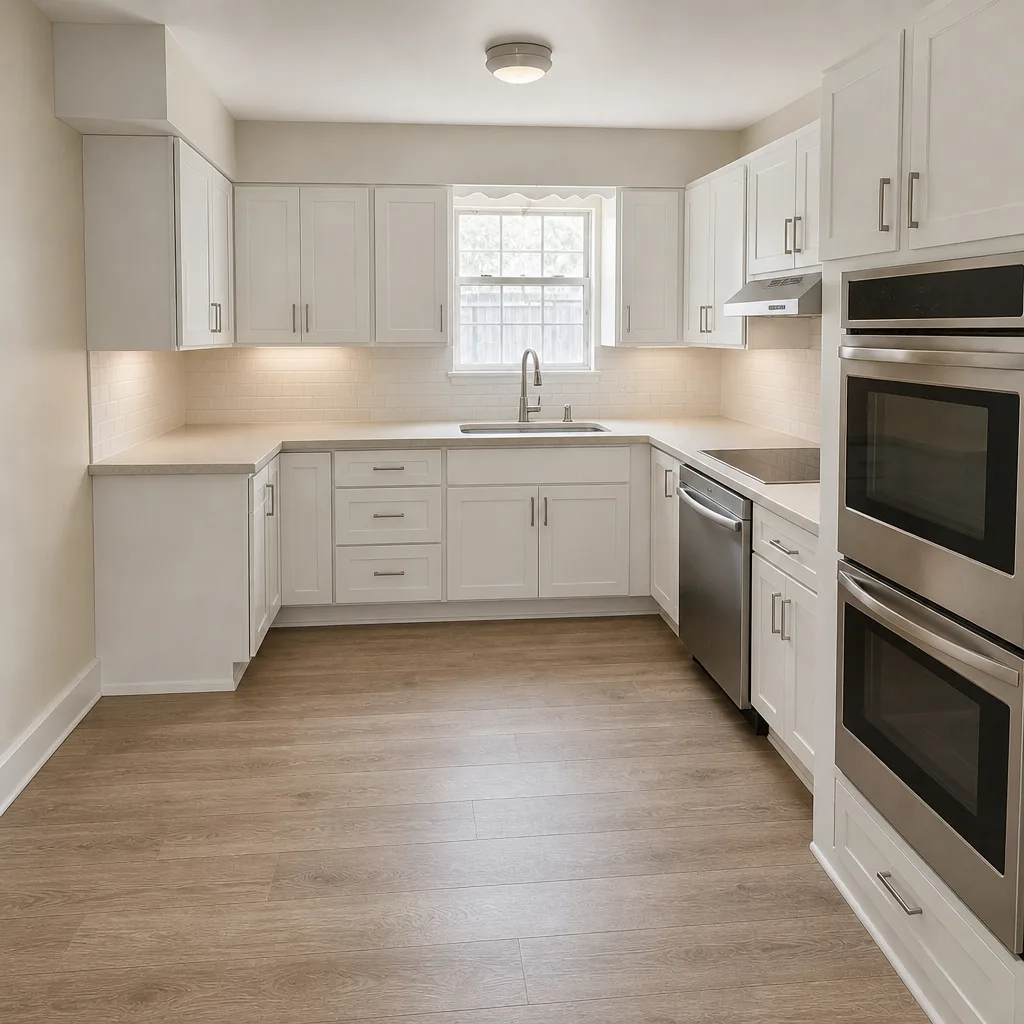
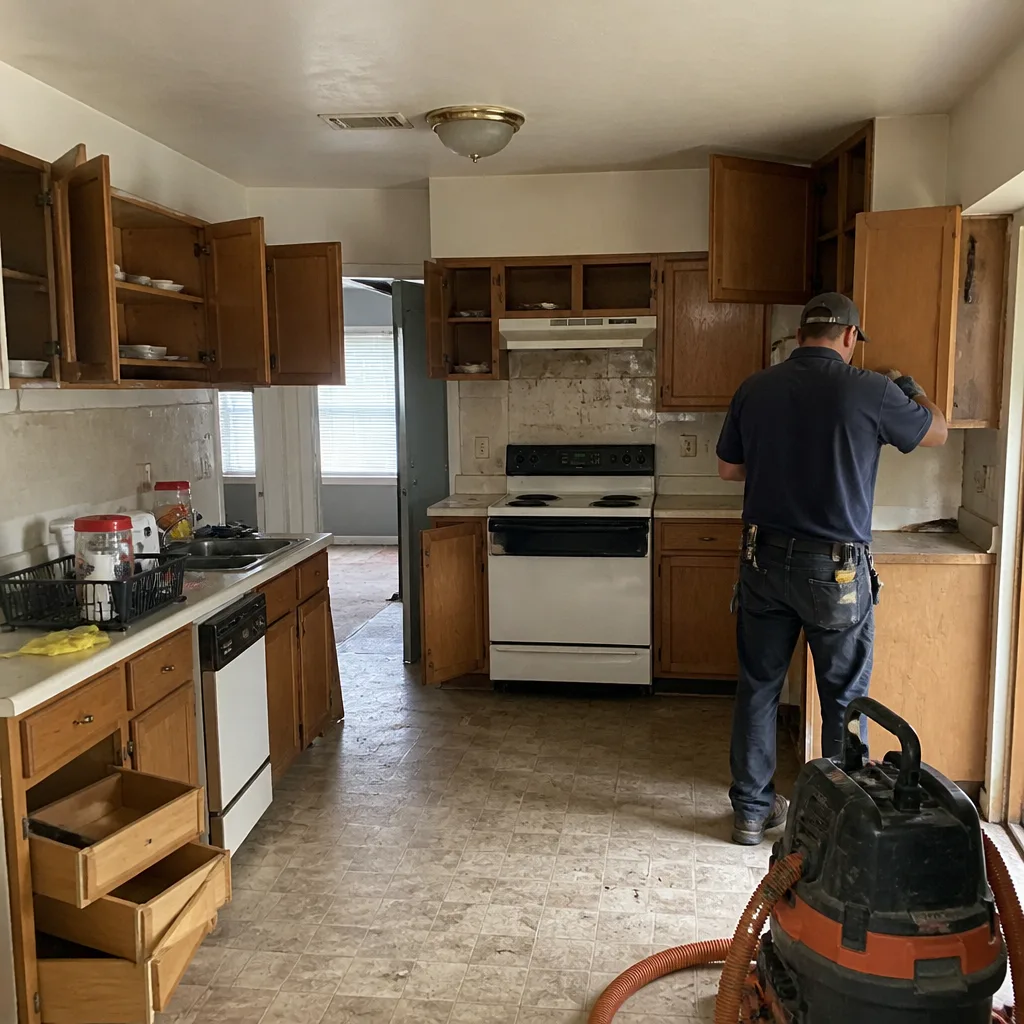
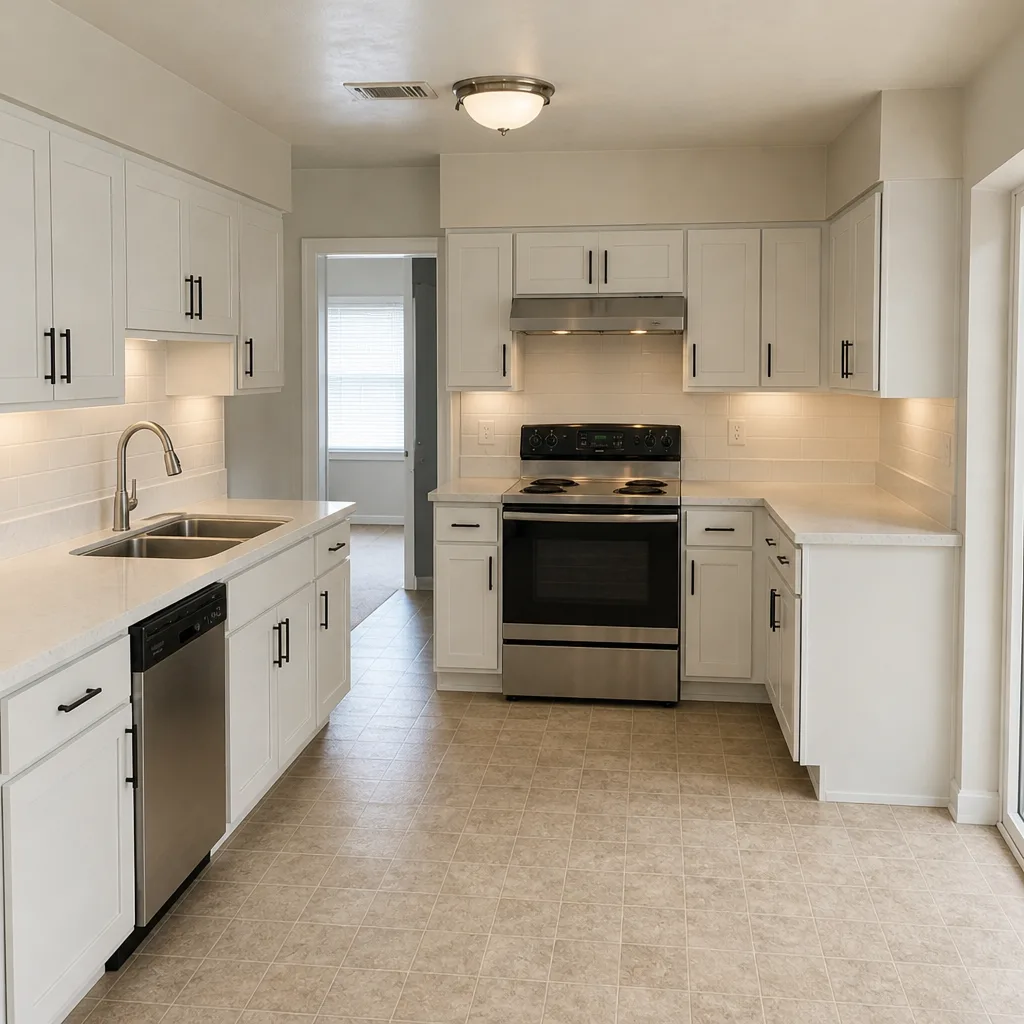
See the difference
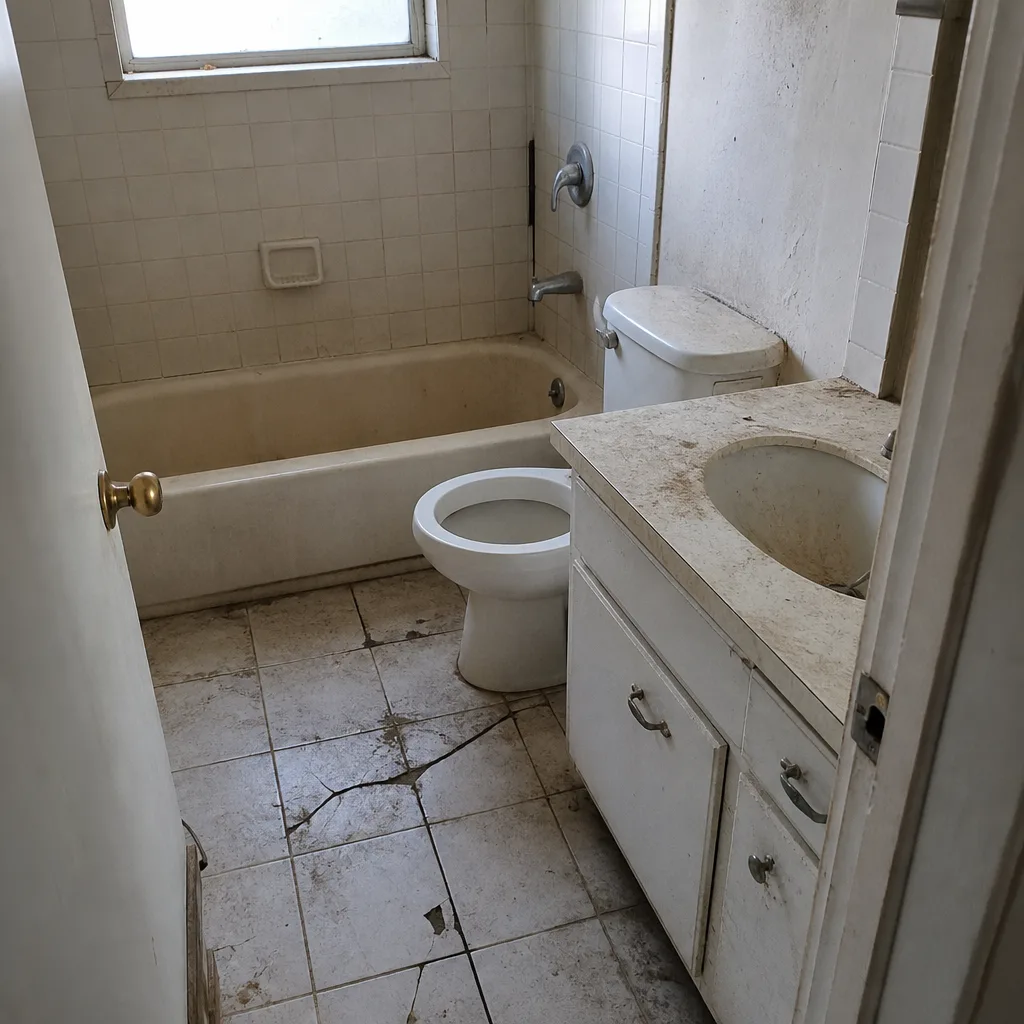 Before
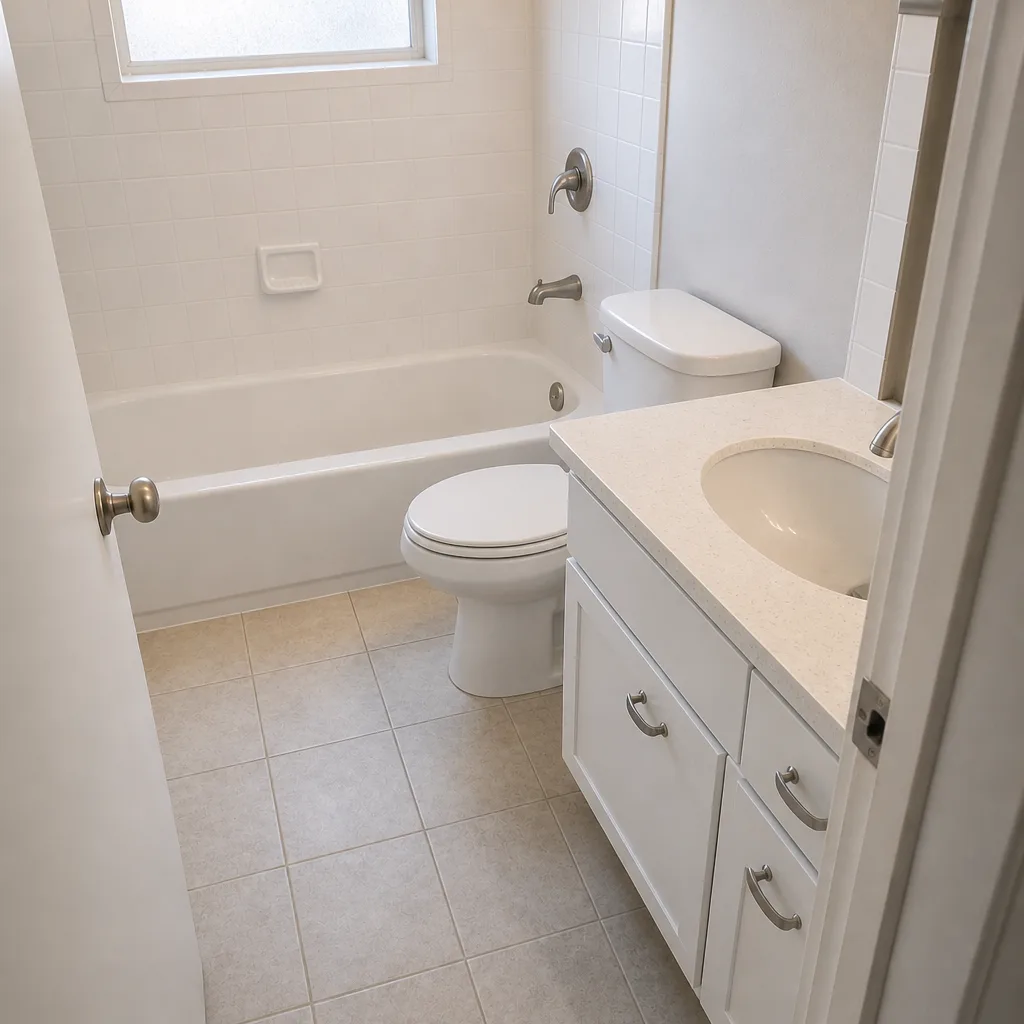 After
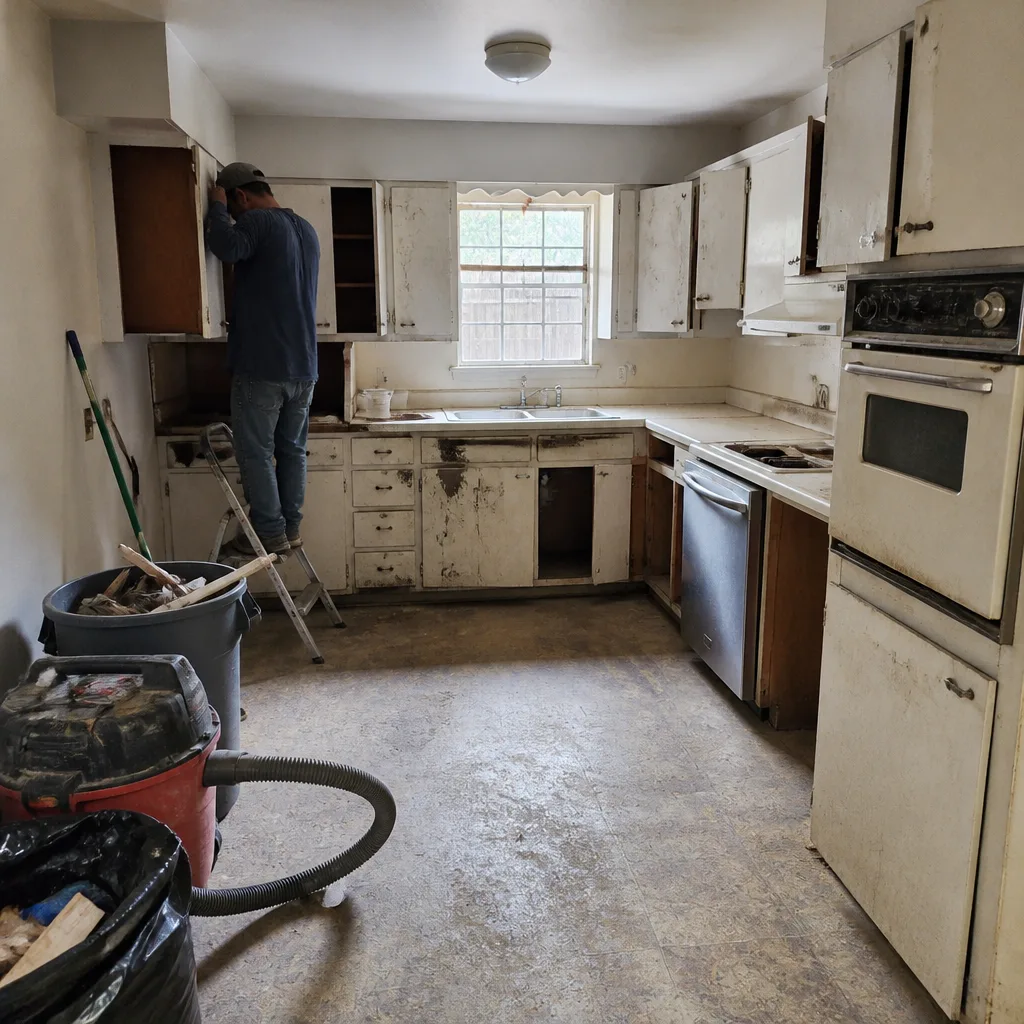 Before
 After
 Before
 After
When to Call a Professional
Call us when the job touches water inside a wall, gas at all, electricity on a new circuit, or anything load-bearing. Call when the work is permitted, so the file is clean at resale. Call when you’ve started a project and found soft wood, active moisture, or a substrate that needs to come out. Call when you’re on a timeline that matters more than your weekend. And call when the question is “how much would this run if I hire it out,” even if the answer is “actually, you can do that one yourself.” Penhallow Remodeling Garland offers free estimates in Garland – call (844) 560-4146 and we’ll give you a written price before any work starts, so you can compare it honestly against your DIY plan. No hard sell, no pressure. Just a number you can hold us to.
Frequently Asked Questions

DIY saves roughly 30 to 45 percent on paper for a cosmetic bathroom refresh, but the savings usually disappear if you touch tile in a wet area, plumbing, or electrical. A properly built shower is the most likely place for a DIY shortcut to fail, and the correction typically runs 1.5 times the original pro quote. If you want a real number to compare against, call (844) 560-4146 for a free written estimate.
Yes for any electrical, plumbing, mechanical, or structural change, and no for pure cosmetic work like painting, cabinet hardware, or replacing a countertop in kind. Garland’s Building Inspection division requires permits for new circuits, moved water lines, water heaters, and gas work, and those scopes require a licensed tradesperson. When in doubt, ask before you buy materials. A five-minute phone call to us at (844) 560-4146 can save you a resale headache.
Improperly waterproofed tile showers, by a wide margin. The homeowner installs cement board correctly, then skips the waterproof membrane or gets the pan slope wrong, and the failure doesn’t show until water has been finding its way into the framing for a year or more. Mold remediation in North Texas homes averages around $2,300, and that’s before tile and framing repair.
Often no, especially if the work is unpermitted or was done outside licensed-trade requirements. Insurance carriers typically deny claims for unpermitted electrical, plumbing, or structural work. That’s the hidden risk in every DIY plumbing or electrical project, and it’s the one most people don’t weigh before starting. Call us for a written estimate before you risk it: (844) 560-4146.
Painting, cabinet hardware, and caulk touch-ups are the three categories we routinely tell homeowners they can do themselves. All three are reversible, all three fail visibly and cheaply, and all three add real value when done correctly. Anything that touches a gas line, an electrical panel, or a load-bearing wall should go to a licensed pro.
Scope, liability, and a fixed endpoint. A written quote names exactly what’s included and what brands and materials you’re getting, carries the contractor’s insurance and bond, and locks a finish date. Penhallow includes all three on every quote, plus the 365-Day Done Right Promise in writing. That’s a promise no DIY estimate can make, and it’s why so many Garland homeowners end up calling once they’ve seen the real number.
The Bottom Line
The DIY question isn’t about your skill; it’s about reversibility. Paint, hardware, and caulk touch-ups are safe because a mistake is fixable. Showers, gas, new electrical circuits, and load-bearing walls aren’t, because the mistake lives inside your house for decades and costs more to undo than to have done right. In Garland, where permitting, insurance, and shifting clay soils all make invisible work riskier, the line is clear: cosmetic work is yours, and everything structural, wet, or code-required belongs to a licensed pro with a written quote and a written guarantee behind it.
If you’d like us to look at a project you’re considering, or a job that’s already gone sideways, call (844) 560-4146 for a free estimate. We’re a live-answered phone, 24/7, and we put the price in writing before any work starts.
Written by the team at Penhallow Remodeling Garland.