Last updated November 18, 2026



Free written scope consultation - allowances, timeline, and change-order rules on paper before a single trade is scheduled
DIY vs Professional Bathroom Remodeling: What’s Safe to Do Yourself
Here’s the part most DIY guides skip: a shower can look flawless and still be ruined. When we pull a failed shower pan out of a Garland home, we often find the tile set perfectly – straight lines, clean grout – sitting on top of a waterproofing membrane that was installed backward, never sealed at the seams, or skipped entirely. The failure hides behind the wall for years, then shows up as a soft subfloor and mold that no home inspector catches until it’s structural. This guide draws the real line between the bathroom projects you can safely take on and the ones where a small mistake becomes a five-figure repair.
Quick Answer
In a bathroom, the safe DIY list is painting, swapping vanity light fixtures, replacing a toilet, and changing out a faucet – jobs that are reversible and don’t touch the waterproofing envelope. Tile in a wet area (shower walls, shower floors, and the immediate floor around them), plumbing rough-in, electrical circuits, and any wall relocation are professional territory. The dividing line isn’t skill; it’s what happens when the work fails invisibly.
Styles & brands we work with
- Kitchen remodeling
- Bathroom remodeling
- Home additions & ADU
- Roofing
- Windows & doors
- Driveway & pavers
- Fence
Table of Contents
- Which bathroom tasks are genuinely safe to do yourself?
- Honest skill thresholds for the “easy” jobs
- Why tile installation is a split answer
- What Texas plumbing and electrical code actually requires
- The hidden cost of a failed DIY waterproofing job
- The hybrid approach: save money without taking on risk
- Common mistakes to avoid
- When to call a professional
Which bathroom tasks are genuinely safe to do yourself?
These are the jobs where a mistake costs you an afternoon and a trip to the hardware store, not a wall cavity. They’re reversible, they don’t involve opening the waterproofing envelope, and they don’t require a permit in most Garland homes.
- Painting. The safest of all. A gallon of bath-rated paint (look for a mold-and-mildew-resistant label) and proper ventilation. The only real risk is drip on a surface you didn’t tape off.
- Vanity light swap. Replacing a fixture that’s already wired in the same location, on the same circuit, is a two-hour job for a careful homeowner who knows how to kill the breaker and verify it’s dead. Adding a new circuit or moving the box is a different story.
- Toilet replacement. Pulling an old toilet and setting a new one is well within reach. The flange has to be sound and the wax ring has to seat clean. Do it wrong and you’ll know within a week when the floor around the base goes soft.
- Faucet swap. Same water lines, same holes, same shutoff valves – a straightforward job. If the shutoff valve is seized or the supply line is brittle, stop and call a plumber before you make it worse.
Every one of these is a finish-layer change. None of them affects the watertightness of the room or the structure behind the wall.
Honest skill thresholds for the “easy” jobs
“Easy” gets thrown around a lot. Here’s the honest read on each, drawn from what we see when a homeowner hands a half-finished project to us.
Painting: You need patience and a steady hand. If you can tape a clean line and keep a wet edge, you’re fine. Budget a weekend for a small bathroom.
Vanity light: You need to understand how to test a circuit with a non-contact tester before you touch anything. If you’ve never opened a switch box, watch a licensed electrician do one first.
Toilet replacement: You need to be comfortable with weight and leverage – a toilet is awkward, and the flange bolts will fight you. You also need to know what a damaged flange looks like, because that’s the one thing that turns a one-hour job into a subfloor repair.
Faucet swap: The easiest of the four, provided the shutoffs actually close. Turn them off, open the faucet to drain pressure, and check underneath with a flashlight before you disconnect anything.
If any of these descriptions make you hesitate, that hesitation is accurate. There’s no shame in it, and no judgment. We’d rather you call before you start than after.
Why tile installation is a split answer
This is where DIY confidence most often goes wrong, and it comes down to one word: wet. Floor tile in a dry area – a bathroom floor away from the shower, a powder room, a vanity backsplash – is a genuinely reasonable DIY project for a homeowner with patience. The substrate is stable, the waterproofing requirement is minimal, and if the layout is off by an eighth of an inch, it’s cosmetic.
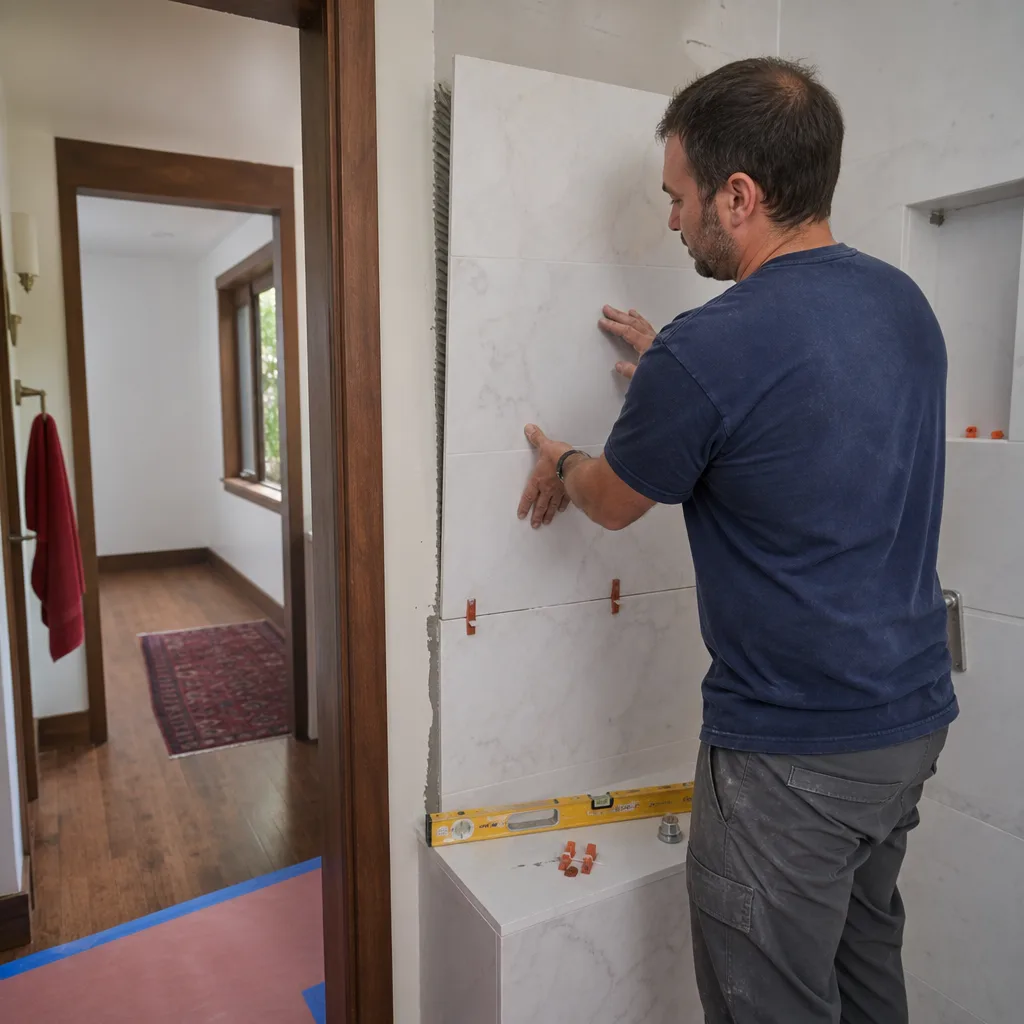
Shower tile is a different science. A shower wall and shower floor have to move water away from the framing, seal every penetration (the shower valve, the drain, the corners), and stay watertight for decades. That takes a waterproofing membrane – a bonded sheet or a liquid-applied coating – installed exactly per the manufacturer’s spec. That means proper substrate (cement board, not greenboard drywall), correct seam treatment, a sloped pan, and a flood test before you set a single tile.
We’ve seen a Garland homeowner set a beautiful shower in a weekend and lose the whole cavity six years later because the weep holes at the drain were blocked with thinset. The tile looked perfect the entire time. The failure was invisible. That’s the whole argument for hiring the wet side of the job.
What Texas plumbing and electrical code actually requires
Texas doesn’t license plumbers at the state level the way some states do, but local jurisdictions do require permits for work that touches the plumbing system beyond a simple fixture swap – and Garland is no exception. In practice, the line looks like this:
- You can swap a faucet or a toilet without a permit in most Garland homes, because you’re replacing a fixture on existing connections.
- Moving a drain, relocating a supply line, or adding a new fixture requires a permit and, in almost every case, a licensed plumber or a contractor who carries the right license for the job.
- Adding a circuit for a heated towel bar, a new exhaust fan, or a GFCI outlet requires an electrical permit and a licensed electrician. Bathroom circuits sit in wet locations, and the code requirements around GFCI protection and bonding are strict.
- Any structural change – moving a wall, widening a doorway, cutting a header – requires a permit and a structural plan. This is where a homeowner can unknowingly create a real safety issue.
Permits protect you on resale. A Garland buyer’s inspector will flag unpermitted work, and the fix can cost more than the job. Hiring a professional who pulls the permit and passes the inspection is part of what you’re paying for.
The hidden cost of a failed DIY waterproofing job
The original professional quote for a shower rebuild might look like a lot. The repair from a failed DIY shower looks much, much worse. Here’s what actually shows up in the quote when we get called in:
- Mold remediation: Containment of the affected space, removal of contaminated materials, and air scrubbing. This is separate from the rebuild cost and often the largest line item.
- Drywall and framing replacement: Any framing that’s been wet for years has to be cut out and replaced. That’s demolition, reframing, and new drywall.
- Subfloor replacement: Wet subfloor under a shower floor doesn’t dry out. It rots. Pulling and replacing it means the whole shower comes out and the tile has to be reset.
- Full shower rebuild: You pay for the shower twice – once when you did it, once when it’s redone correctly.
In our experience in Garland, a failed shower rebuild that started as a $4,000 – $7,000 DIY job often lands at $9,000 – $18,000 for the repair and rebuild, depending on how far the moisture traveled. That’s the real cost of skipping the membrane. It’s the invisible line.
The hybrid approach: save money without taking on risk
You don’t have to choose between doing everything and doing nothing. The hybrid model is what we recommend to most Garland homeowners who want to save money without absorbing the technical risk: hire the trades for the parts that have to be right, and do the cosmetics yourself.
- Hire a pro for rough plumbing and electrical. The work behind the wall – drain lines, supply lines, the shower valve body, the GFCI circuit – is what fails invisibly and what code cares about. Get it done right and inspected.
- Hire a pro for the waterproofing envelope and shower tile. The membrane, the pan, the flood test, and the tile in the wet zone are one continuous system. Splitting this work is where most DIY showers fail.
- Do the painting yourself. Save the labor line on the most time-consuming cosmetic job in the room.
- Swap your own fixtures and vanity light after the rough-in is done and the walls are closed. There’s no permit involved if you’re replacing a fixture on existing connections.
- Handle demolition yourself if you’re comfortable with it and you’re certain you won’t cut into a supply line or a load-bearing wall. Even then, ask the contractor what to watch for before you swing the hammer.
The savings are real. So is the safety. Our technicians have up to 22 years of experience with the parts of the job that have to be right, and we’re happy to leave the finish work in your hands. Take a look at our Bathroom Remodeling in Garland page for how that scope is priced.
Common Mistakes to Avoid
- Setting tile over greenboard drywall in a wet area. Greenboard is moisture-resistant, not waterproof. A shower wall has to have cement board or a membrane system underneath, or it’s already failing.
- Skipping the flood test. Every shower pan should hold water for 24 hours before you set the floor tile. This step feels like a delay. It’s the whole safety net.
- Blocking the weep holes at the drain. Thinset pushed into the drain’s weep channels traps water in the pan. The tile looks fine; the pan becomes a bathtub behind it.
- Building a shower bench or niche without a slope. Water has to leave. A flat horizontal surface inside a shower is a mold farm waiting to happen.
- Moving a drain or a supply line without a permit. In Garland, this is the most common unpermitted change we see. It comes back to bite on resale.
- Replacing a toilet without checking the flange. A cracked or low flange is the single most common reason a new toilet leaks at the base, and it’s a subfloor replacement if it’s ignored.
- Calling a contractor only after demo. Booking the pro before you start means the plumbing rough-in is ready when you need it, not three weeks later. Give yourself the schedule room.
When to Call a Professional
Call a professional when the work touches the waterproofing envelope, the rough plumbing, the electrical panel or a new circuit, or anything structural. Call when you’re not certain a shower pan can hold water for a day. Call when the toilet flange looks rusted, the shutoff valve won’t close, or the wall behind the tile feels soft when you press on it. Call when you want the project done once, on a schedule, with a written price before anyone picks up a tool.
Penhallow Remodeling Garland offers free estimates in Garland. We give you a written price before work starts, not a verbal ballpark, and we back the work with the Kingswell Guarantee: a 365-Day Done Right Promise, a defined arrival window, a clean job site, and a written guarantee on every project. Our technicians are background-checked and arrive in uniform, and a live person answers the phone 24/7 – no voicemail. Call (844) 560-4146 to schedule your free estimate.
See the difference
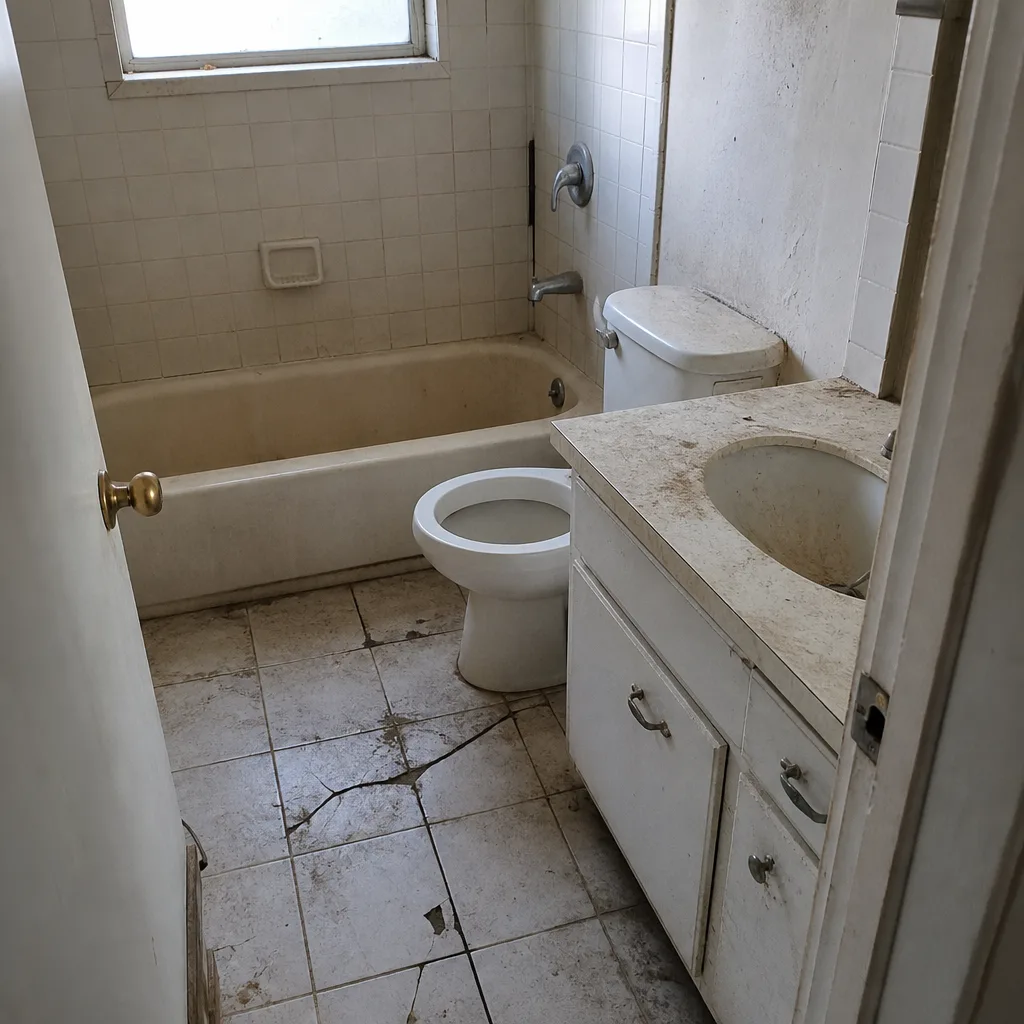 Before
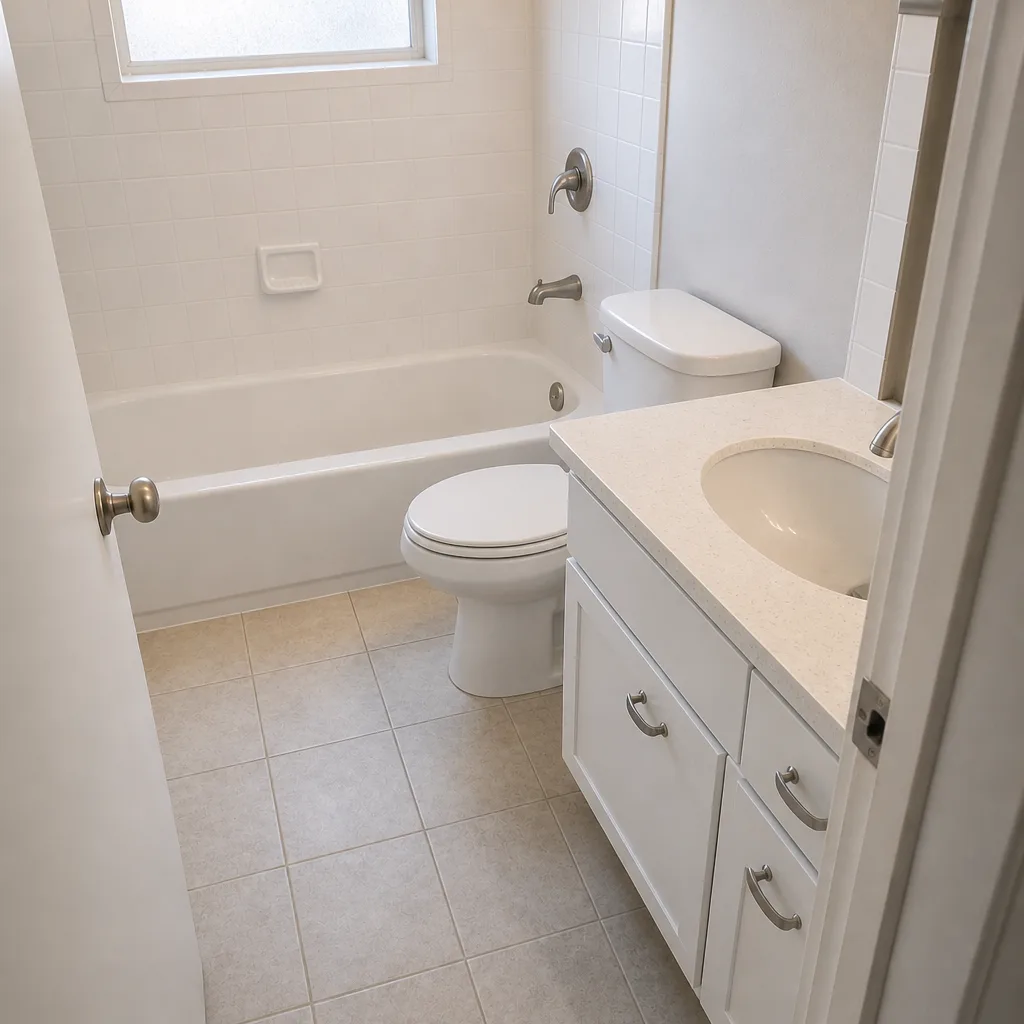 After
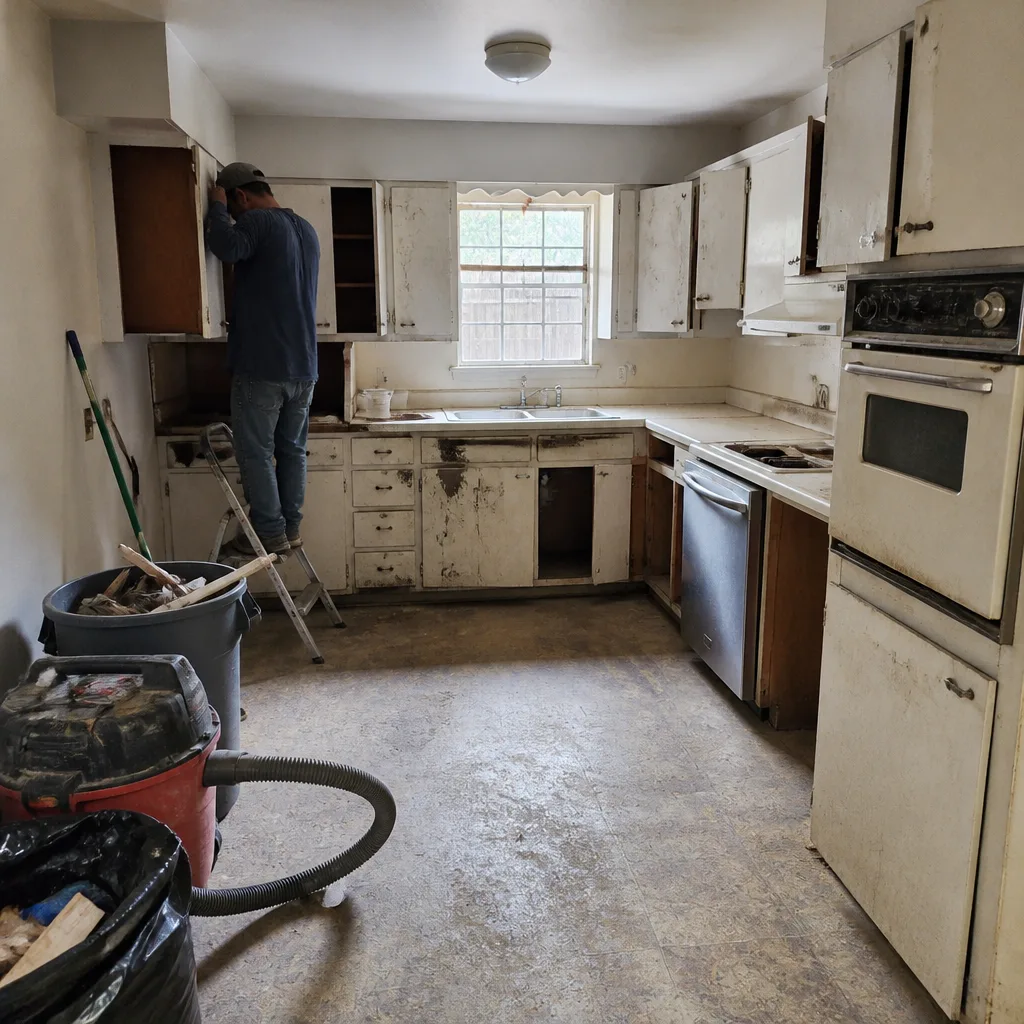 Before
 After
 Before
 After
Frequently Asked Questions
You can safely handle the cosmetic and fixture-swap portions of a bathroom remodel in Garland – painting, vanity lighting, toilet and faucet replacement – without a permit or a professional. The parts that involve the waterproofing envelope, plumbing rough-in, electrical circuits, or structural changes are where a private inspection and a licensed trade matter. The dividing line is whether the work fails invisibly.
Usually not. A shower rebuild with proper waterproofing runs $4,000 – $8,000 in the Garland market for a standard 3×5 shower, and a failed DIY shower costs $9,000 – $18,000 to repair once mold and subfloor damage are involved. The savings are real only if the waterproofing is done correctly, and that takes more than watching a tile video. Call (844) 560-4146 for an exact quote on the wet side – estimates are free.
Fixture swaps (faucets, toilets), vanity light replacement on an existing circuit, painting, and cosmetic finishes (flooring in a dry area, trim, mirror and cabinet hardware) generally don’t require a permit. Moving plumbing, adding a circuit, and any structural change do. When in doubt, call the city’s permitting office; a two-minute call is cheaper than a resale problem.
A typical full bathroom remodel in Garland runs $12,000 – $28,000 depending on size, tile selection, and whether the layout changes. A cosmetic refresh (paint, fixtures, vanity) runs $3,000 – $7,000. A shower rebuild with new waterproofing and tile runs $4,000 – $8,000. The number that moves most is layout: keeping plumbing in place saves thousands versus moving a drain or a supply line.
Yes, for a straightforward teardown that doesn’t cut into a load-bearing wall or a supply line, and only after the contractor has walked you through what to leave in place. Demolition is often a $600 – $1,200 labor line on a bathroom, so it’s a modest save. The risk is discovering a surprise behind the wall – a rotted subfloor, an old leak – with no one on site to assess it. Have the pro check the cavity before you demo.
Most homeowner policies cover sudden and accidental water damage, but they typically don’t cover the cost of the faulty work itself – and a slow leak from a DIY install that wasn’t permitted can be a coverage dispute. The safer route is a permit and a licensed plumber for anything beyond a fixture swap. Call (844) 560-4146 and we’ll walk you through what your project needs.
The Bottom Line
The line between safe DIY and risky DIY in a bathroom is invisible, and that’s the point. Painting, fixture swaps, and toilet replacement are fair game – they’re reversible, they don’t touch the waterproofing envelope, and a mistake costs you a Saturday. Tile in a wet area, plumbing rough-in, new electrical, and structural changes are professional work, because the failure doesn’t show up until the wall cavity is opened six years later.
The hybrid approach is the smart middle ground: hire the trades for the parts that have to be right, and do the finish work yourself. If you want a written price on the technical side before you start, or a second set of eyes on a plan you’ve sketched out, call for a free estimate.
Get a Written Price Before You Start
Whether you’re remodeling the whole bathroom or just want the wet side done right, we start every project the same way: a written price before any work begins, a defined arrival window, and a written guarantee on the finished job. Our technicians are background-checked and arrive in uniform, our materials come from brands like KraftMaid, Cambria, Kohler and Moen, and the 365-Day Done Right Promise covers the work in writing. If something needs a second visit, we come back free – no service call, no re-inspection fee. A live person answers the phone 24/7, not a voicemail prompt.
Call (844) 560-4146 to schedule your free estimate. You can also explore our Penhallow Remodeling Garland home, our General Contractor in Garland page for whole-project scope, or our Kitchen Remodeling in Garland page if you’re ready to bring the same approach to the next room.
Written by the team at Penhallow Remodeling Garland.