Last updated November 18, 2026
Free written scope consultation - allowances, timeline, and change-order rules on paper before a single trade is scheduled
DIY vs Professional General Contractor: What’s Safe to Do Yourself
Most homeowners who get burned by a renovation don’t get burned by bad carpentry. They get burned by a paperwork problem that shows up years later – a water damage claim denied because the shower valve behind the wall was installed without a permit, a sale that stalls because a buyer’s inspector spots an unpermitted addition. The line between DIY and hire isn’t drawn by how handy you are. It’s drawn by the permit counter, the insurance adjuster, and the title company. This guide explains where that line sits in Garland so you can decide what’s genuinely safe to take on yourself and what should go to a licensed professional.
Quick Answer
You can safely DIY cosmetic work in Garland – painting, flooring, cabinet refacing, tile backsplash, trim, and swapping a light fixture or faucet. You should hire a licensed professional for anything that touches structural framing, electrical circuits, gas lines, plumbing rough-in, or HVAC, because those categories require permits in Texas and unpermitted work can void portions of your homeowner’s insurance and stall a future sale. The middle category – the “I’ve watched enough videos” projects like a full bathroom remodel – is where confident DIYers most often lose money.
Styles & brands we work with
- Kitchen remodeling
- Bathroom remodeling
- Home additions & ADU
- Roofing
- Windows & doors
- Driveway & pavers
- Fence
Table of Contents
- Where Texas Draws the Line: What Legally Needs a Licensed Pro
- How Unpermitted Work Affects Your Homeowner’s Insurance
- What Unpermitted Work Does to a Garland Home Sale
- The Honest Skill Assessment: Cosmetic vs. Structural vs. Systems
- What “Owner-Builder” Actually Means in Texas
- Cost Comparison: Where DIY Saves Money and Where It Doesn’t
- Garland-Specific Code and Climate Notes
Where Texas Draws the Line: What Legally Needs a Licensed Pro
Texas is famously light on statewide contractor licensing – but that doesn’t mean you can legally do everything yourself. The rules that matter live in local permitting and in separate trade licensing for electrical and plumbing work. The City of Garland issues permits for new construction, additions, remodels that alter the footprint or systems, and most work that touches electrical, plumbing, and mechanical systems. A permit isn’t a permission slip – it’s a record that a licensed inspector verified the work. That record matters later.
The categories that require a licensed trade contractor in Texas regardless of who holds the hammer:
- Electrical work beyond a simple fixture swap. New circuits, panel changes, and rewiring require a licensed electrician and an inspection. Texas doesn’t license electricians statewide, but the City of Garland enforces its own licensing at the permit stage.
- Plumbing rough-in and gas lines. Moving a drain, adding a shutoff, or running a gas line to a new range requires a licensed plumber and a gas pressure test. Gas work especially – that’s a life-safety scope, full stop.
- Structural alterations. Removing a load-bearing wall, cutting a new opening in a bearing wall, or adding a second story requires engineering and permitted inspections. This is where confident DIYers most often get over their skis.
- HVAC changeouts and duct work. Requires a licensed mechanical contractor and a permit.
- Additions and new construction. Full permit set, inspections at framing, rough-in, and final.
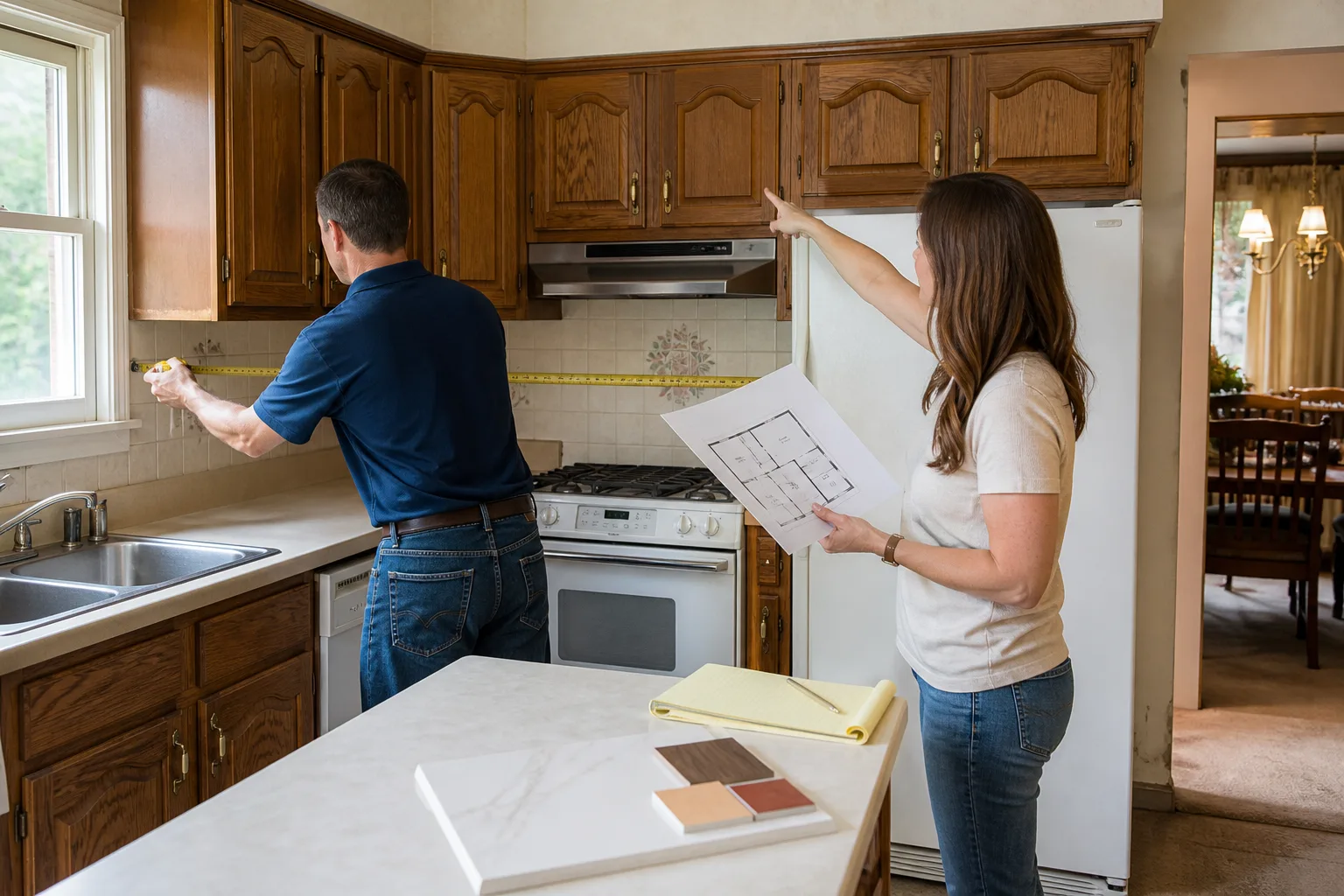
The DIY-safe zone is broad, though: painting, flooring (except wet-area subfloor prep), trim carpentry, cabinet refacing, tile backsplash, shelving, and swapping light fixtures or faucets on existing supply lines. Those don’t require permits in Garland and don’t put a claim at risk. If you’re weighing a full remodel against a phase-by-phase approach, a General Contractor in Garland can tell you which phases need permits before you start demo – that conversation costs nothing and saves the most.
How Unpermitted Work Affects Your Homeowner’s Insurance
Here’s the counterintuitive part that catches homeowners off guard: your insurance policy doesn’t mind that you did the work yourself. It minds that the work wasn’t inspected. If a water damage claim on a remodeled bathroom is traced to a shower pan that was installed without a permit and failed at year two, the adjuster can deny the water damage portion of the claim under the “faulty workmanship” exclusion – even if you paid a contractor a fair price to do it. The exclusion is about the absence of a paper trail, not about who swung the hammer.
In our experience, this is the single most common insurance problem that follows an unpermitted remodel in Garland. The homeowner didn’t do anything wrong on purpose. They just didn’t know the shower pan needed a permit and an inspection before it was covered with tile.
What to check before you decide to DIY or hire:
- Pull your declarations page. Read the “faulty workmanship” and “ordinance or law” exclusions. If either mentions unpermitted work, that’s your signal.
- Call your insurance agent before demo day. Ask plainly: “If I remodel the bathroom and get it inspected, will this be covered? If I remodel it and don’t, will it?” Get the answer in writing if you can.
- Photograph every inspection milestone. Framing, rough-in, and final inspection cards. Keep them with the deed. They’re your proof if a claim is ever questioned.
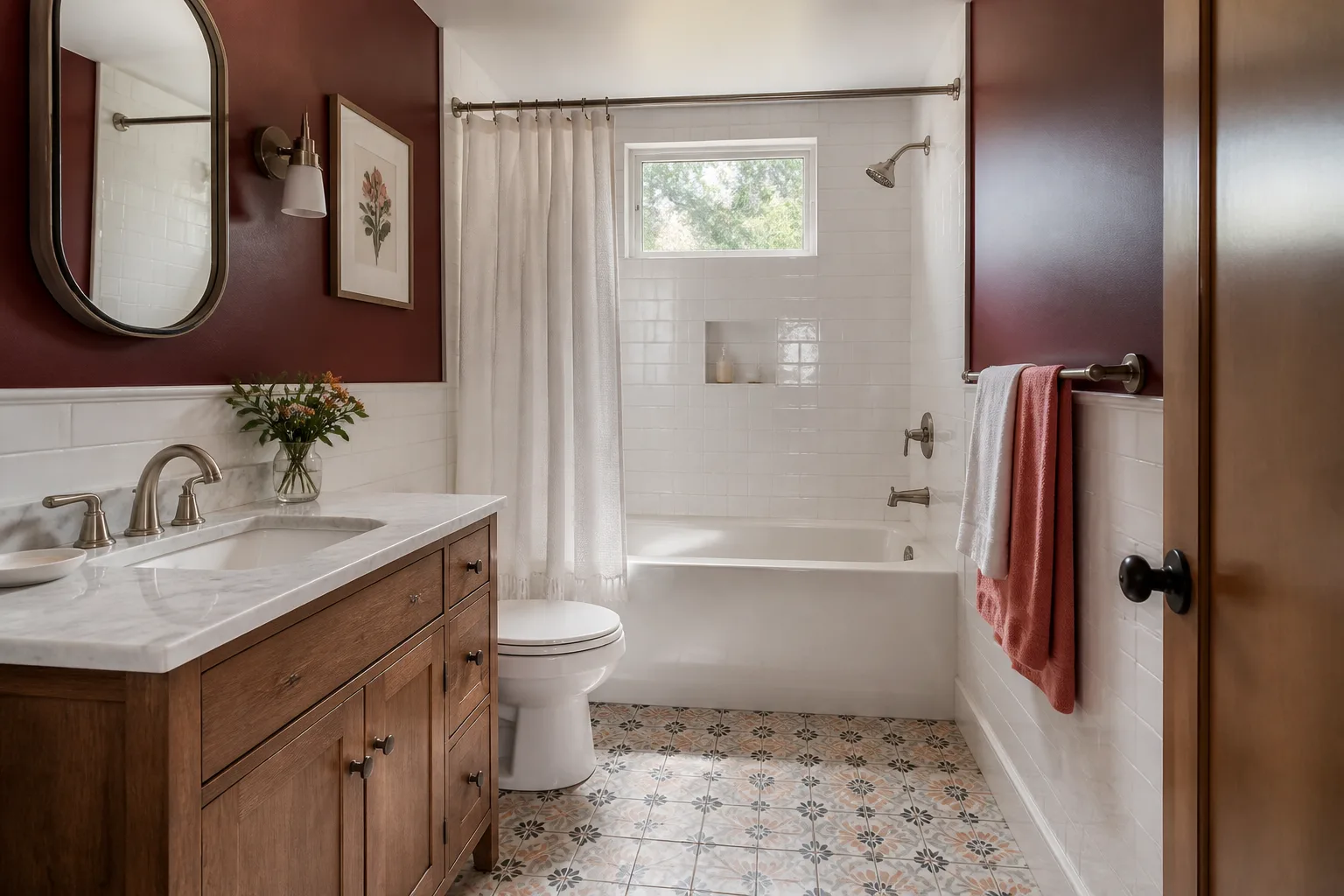
A permitted Bathroom Remodeling in Garland carries the same permit and inspection cost whether you pay a licensed pro or go it alone – the inspection isn’t the expensive part. Skipping it is.
What Unpermitted Work Does to a Garland Home Sale
Garland’s housing stock is older than most of the metroplex – the bulk of the city was built between the 1950s and the 1990s, and a large share of that inventory has already been remodeled at least once. That means buyer’s inspectors in Garland have been trained to look for the telltale signs of unpermitted work: a bathroom that doesn’t match the county assessor’s square footage, a converted garage, an addition with no permit number on file, a kitchen island wired on a single 15-amp circuit. Those flags don’t kill a sale on their own, but they hand the buyer negotiation leverage and they slow down underwriting.
A title company can require remediation before closing if the unpermitted work affects the insurability of the property, the lender’s appraisal, or a local code violation that shows up in a municipal lien search. In our experience, the two things that most often get flagged in Garland are:
- Garage conversions that were never permitted. The county still shows a garage; the house shows a bedroom. That gap is a red flag to both the appraiser and the buyer’s lender.
- Bathroom and kitchen remodels where the layout changed – moved plumbing, moved a wall, added a vent – but the county records don’t reflect an inspection. The buyer’s inspector will ask for the permit. If you don’t have it, expect to negotiate a credit, get it inspected retroactively (if the city allows it), or lose the sale.
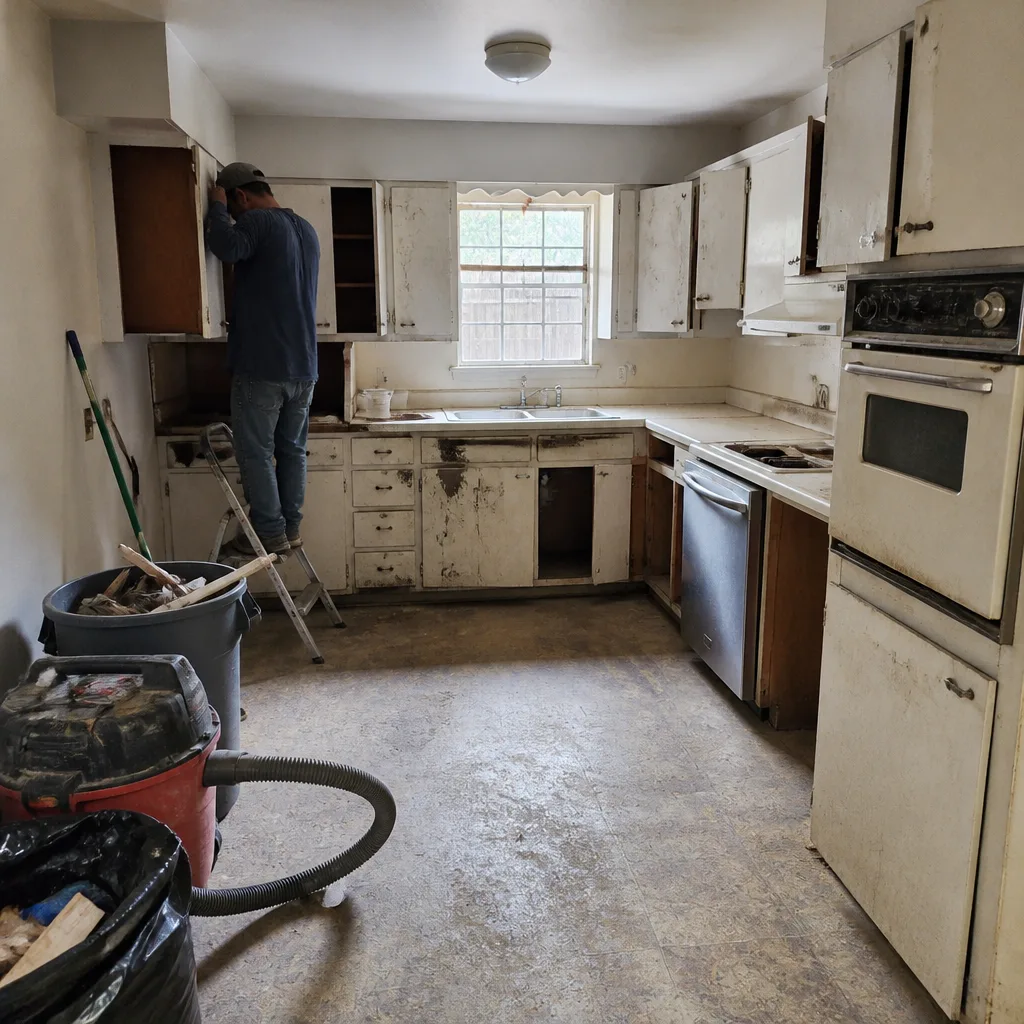
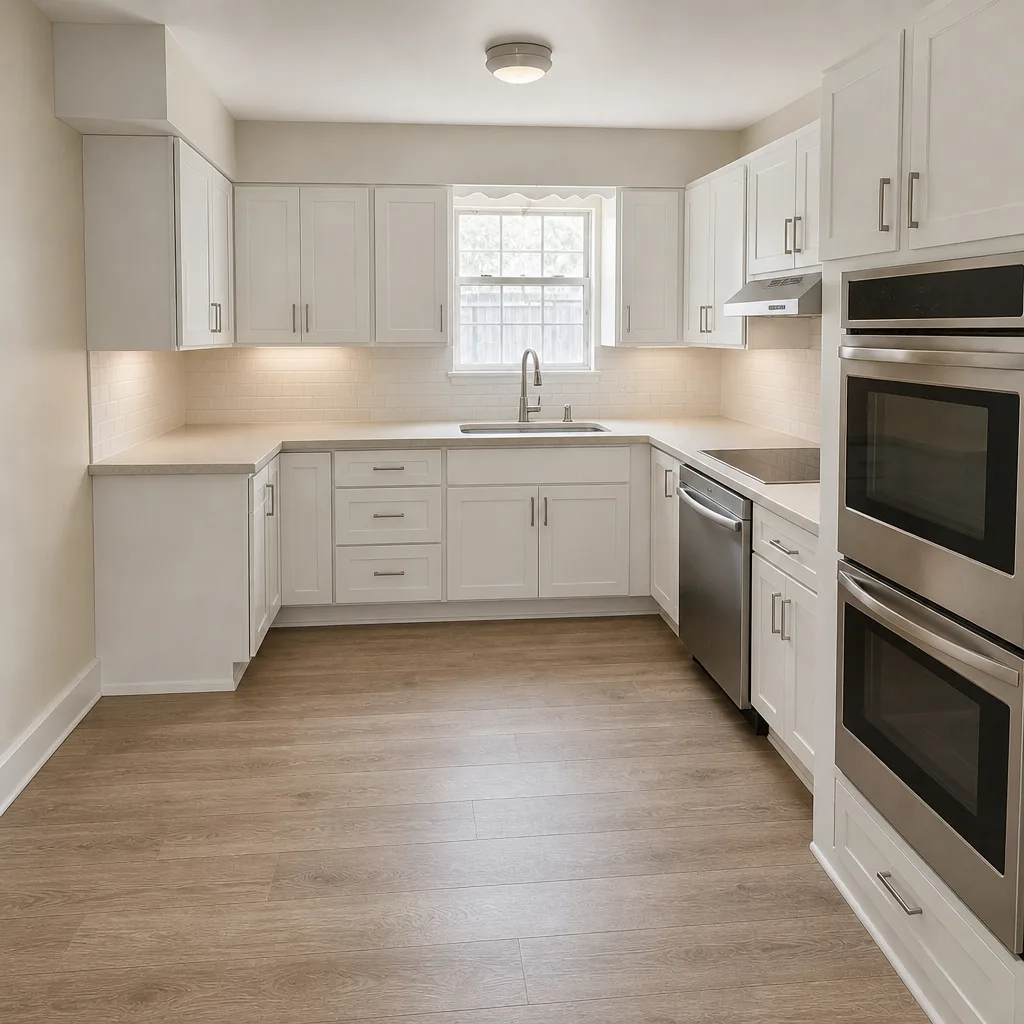
The honest number: in our experience, an unpermitted remodel that gets caught at resale in Garland typically costs the seller somewhere between $3,000 and $12,000 in credits, retroactive inspection fees, or a redo of the specific scope that can’t be inspected after the fact. A permitted Kitchen Remodeling in Garland would have added $600 to $1,800 in permit and inspection costs up front – much less than what it costs on the back end.
The Honest Skill Assessment: Cosmetic vs. Structural vs. Systems
Most DIY decisions go wrong because homeowners lump “I’m handy” into a single skill level. It isn’t one skill. It’s three, and they’re not related. The middle category is where confident DIYers most often lose money – not because they lack ability, but because the failure mode is silent and the fix is expensive.
Cosmetic work: genuinely DIY-friendly
Paint, wallpaper, floating floors, tile, trim, shelving, light fixtures, cabinet hardware, faucet swaps on existing supply lines, and backsplashes. Low permit exposure, low insurance exposure, mistakes are visible and fixable. If you enjoy the work and have the time, this is where DIY reliably saves money. A kitchen backsplash in Garland with Caesarstone slab counters is a great DIY project – the countertop is already set and inspected; you’re just filling the wall between.
Structural work: almost never DIY
Wall removal, beam installation, additions, second-story work, foundation repair. Load paths aren’t intuitive. A wall that “doesn’t look bearing” often is. The failure mode is a settlement crack that shows up two years later, by which time the drywall is back up and the fix is $15,000 – $40,000. Structural work in Garland requires engineering and permitted inspections. Treat this as a hard hire.
Systems work: the middle category that trips up confident DIYers
Electrical, plumbing, and HVAC. The reason this middle category is so dangerous is that the failure mode is invisible. A wrong-sized wire, a poorly soldered joint, a drain that ties into the wrong stack – none of it shows up on the day you finish. It shows up six months later as a fire, a leak, or a mold problem behind a wall you’ll have to demo to find. Systems work in Garland requires a licensed trade contractor and inspections. This is the category where we’ve seen the most expensive “I could have hired it for less” redos.
What “Owner-Builder” Actually Means in Texas
Texas allows a homeowner to act as their own general contractor – the “owner-builder” exemption – on their own primary residence. That means you can pull permits as the owner and hire the trades directly. What homeowner forums don’t mention is the liability side. When you step into the general contractor’s role, you absorb the general contractor’s risks.
The three that matter most:
- Workers’ injury. If a subcontracted framer falls off a ladder on your property and isn’t covered by their own workers’ comp, the claim can land on your homeowner’s policy. Your policy may exclude injuries to paid workers. The gap is real.
- Unpaid subcontractor liens. If your framer doesn’t pay their materials supplier and the electrician doesn’t pay their helper, either can file a mechanic’s lien against your property. As owner-builder, you’re the one who has to fight it.
- Schedule and warranty gaps. Workers hired directly by the owner typically don’t carry the same call-back warranty a general contractor extends. If the tile cracks a month after install, you’re negotiating a fix rather than invoking a guarantee.
The trade-off is real: owner-builder can save 15% – 20% on a full remodel, but it transfers all the risk to you. In our experience, most Garland homeowners who try it on a whole-home scale end up hiring a general contractor partway through. Sound familiar? A free walkthrough of a Penhallow Remodeling Garland home project gives you a clear scope before you decide which direction to go.
Cost Comparison: Where DIY Saves Money and Where It Doesn’t
Honest math, not hype: DIY saves real money on labor straight across on cosmetic projects. It almost never saves money on systems projects once you account for the redo. Here’s the comparison in Garland terms.
- Interior painting, 1,800 sq ft: Pro quote $4,500 – $7,500. DIY materials $600 – $1,200. DIY saves thousands, the failure mode is bad cut lines, fixable.
- Tile backsplash, 40 sq ft: Pro quote $1,800 – $3,200. DIY materials $350 – $700. DIY saves money comfortably if you’re patient.
- Luxury vinyl plank flooring, 800 sq ft: Pro quote $3,800 – $6,400. DIY materials $1,600 – $3,200. DIY saves $2,000+, but only if you’ve done subfloor prep correctly – moisture under planks is a silent problem.
- Full bathroom remodel with moved plumbing: Pro quote $18,000 – $34,000. DIY attempt with the same scope, including a plumber and electrician for rough-in, typically saves $3,000 – $5,000 in labor – but the failure mode (a shower pan that leaks, a tile set on the wrong substrate) redoes the whole thing for $8,000 – $14,000 on top. This is the category where DIY usually loses.
- Electrical panel change: Pro quote $1,800 – $3,500 permitted. DIY is not legal in Garland. Don’t. Fire risk and uninsurable.
- Gas line run to a new range: Pro quote $400 – $900 permitted and pressure-tested. DIY is not legal. Life-safety scope.
Where the diagnosis is truly clear – a cosmetic refresh, a backsplash, a flooring replacement in a dry room – DIY is a good use of a weekend. Where the scope is a full remodel, a systems upgrade, or anything structural, the honest math favors hiring because the redo cost is bigger than the labor. We install surfaces from trusted brands like Moen fixtures and Blanco sinks in our projects partly because those brands carry their own warranties alongside the ones we back – layered protection that DIY doesn’t provide.
Garland-Specific Code and Climate Notes
Two things make Garland remodeling decisions different from a generic national guide. The first is the city’s permit process. Garland requires permits for most work beyond cosmetic, and the city offers a homeowner permit track for work a homeowner intends to do themselves – but you’ll still need an inspection card for anything electrical, plumbing, or structural. Submitting a permit application without the licensed trade signatures where required will bounce. The city’s development services counter on Commerce Street can tell you exactly what your specific scope needs.
The second is climate. Garland’s clay-heavy soil moves significantly with seasonal moisture, which means foundation movement is a real factor. Anything that adds load to a foundation wall – a new addition, a heavy tile floor on a previously carpeted slab, a new load-bearing alcove – should get a structural check before construction. A drywall crack that “looked cosmetic” often turns out to be a foundation signal. This is also a story that comes up repeatedly in Garland during the dry summer-to-fall transition, when the clay shrinks and interior cracks appear. Treat foundation-adjacent remodeling as a systems project, not a cosmetic one.
Our technicians have up to 22 years of experience in the North Texas market, and background-checked, uniformed technicians on every job – that standard applies on DIY-adjacent consults too, when you bring us in to tell you which parts of a scope genuinely need permits.
Common Mistakes to Avoid
- Skipping the permit because “nobody will know.” The permit history is public record. A buyer’s inspector, a title company, and an insurance adjuster all read it. The permit cost is always cheaper than the discovery cost.
- Doing the electrical work yourself on a new circuit. A fixture swap is safe; a new circuit behind drywall is not. The City of Garland won’t inspect a self-installed new circuit without a licensed electrician’s signature, and your insurance will look for one if there’s ever a fire.
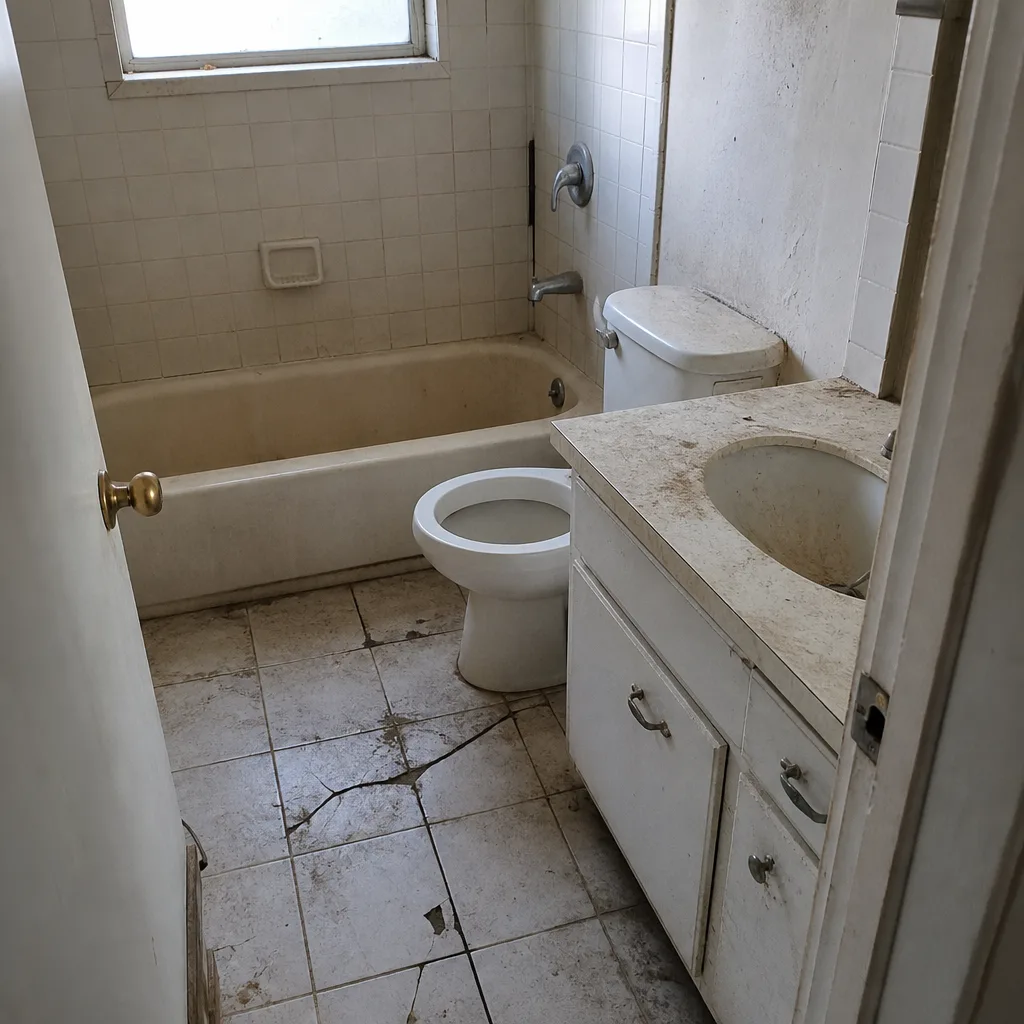
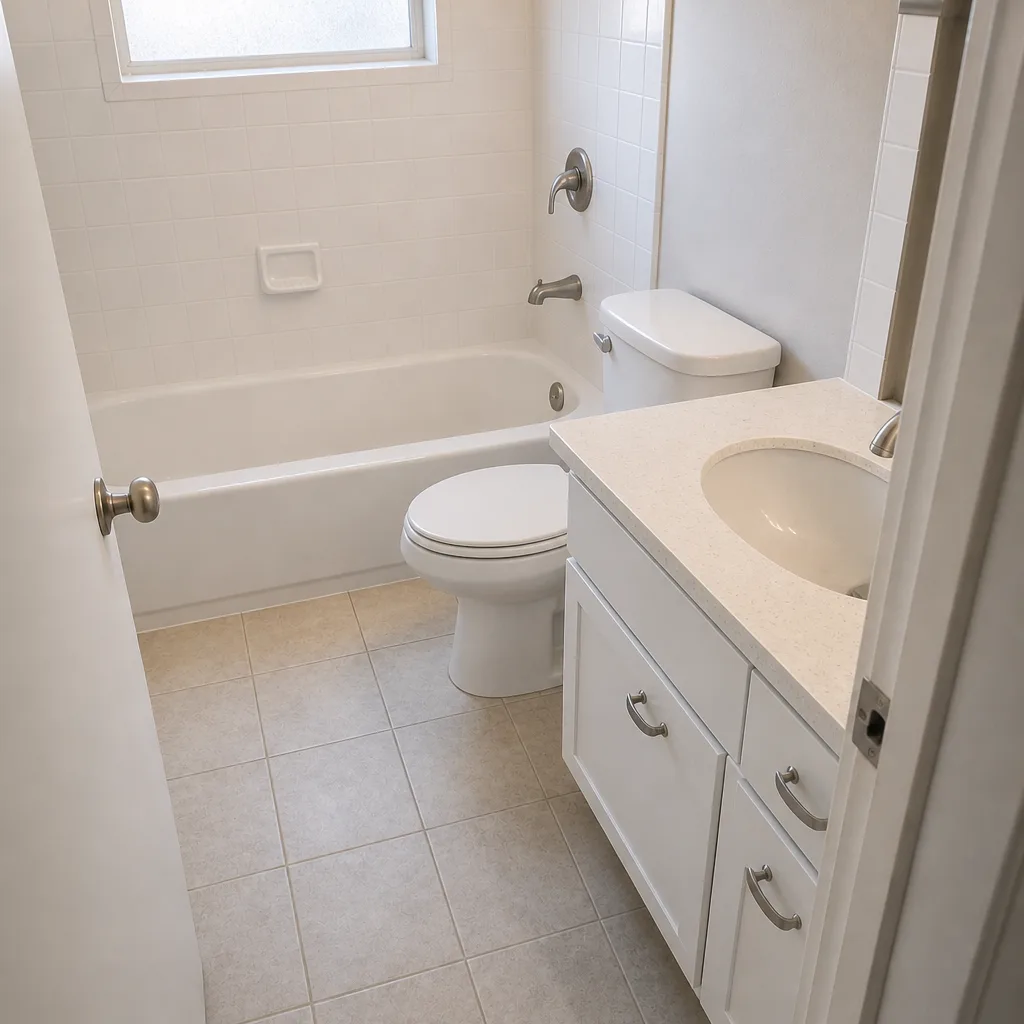
- Treating a bathroom remodel as “just tile and a tub.” Behind the tile is a shower pan, a waterproofing layer, and a rough-in that all need to be inspected before they’re covered. In our experience, this is the single most common unpermitted scope in Garland.
- Acting as owner-builder without checking your insurance first. Call your agent before you hire the first sub. A fifteen-minute call now can prevent a claim denied in year three.
- Skipping a structural check on a “small” wall removal. A wall that doesn’t look load-bearing often is. The engineering cost ($400 – $900 in Garland) is a fraction of a settlement fix.
- Not documenting inspections. Photograph every inspection card, keep the receipts, and file them with the property records. They’re the paper trail that saves you on resale.
- Hiring a contractor who won’t give you a written price before demo day. Verbal ballparks that change at the door are the number-one source of “I should have hired somebody else” calls we get in Garland. Ask for a written number before work starts. Full stop.
See the difference
 Before
 After
 Before
 After
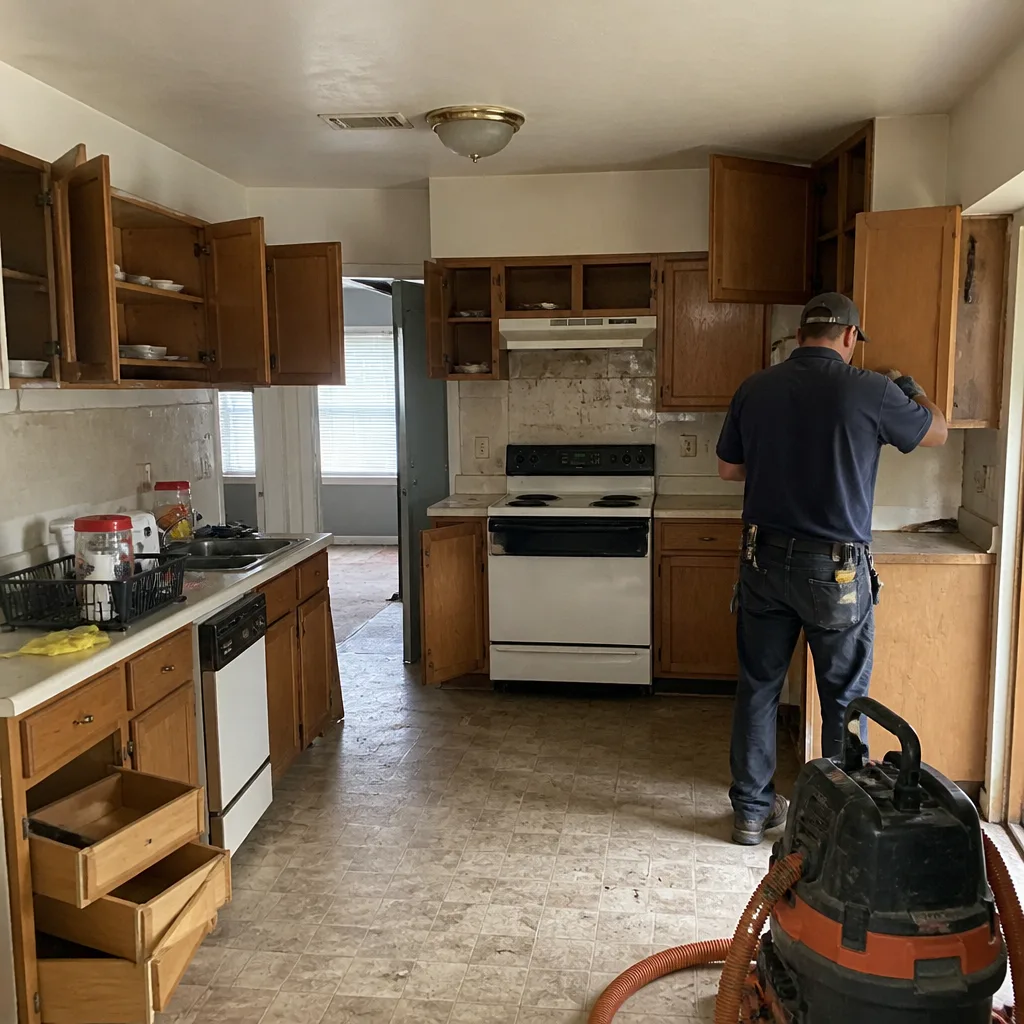 Before
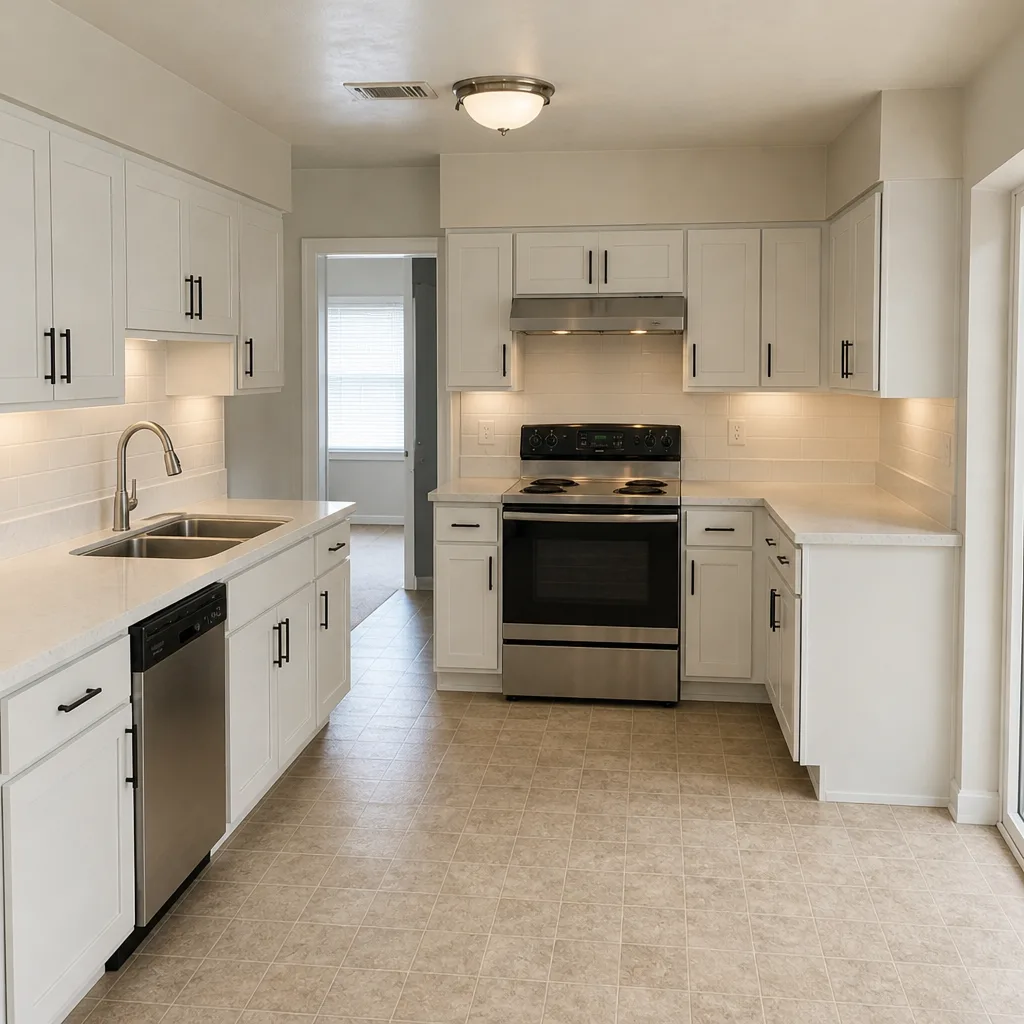 After
When to Call a Professional
Call a licensed professional in Garland when the work touches structural framing, electrical circuits beyond a fixture swap, plumbing rough-in or gas, HVAC, or anything requiring a permit and inspection. Call when the scope is a full bathroom or kitchen remodel where layout is changing, when the home is on the market in the next three years, or when you can’t get your insurance agent to confirm in writing that unpermitted work will be covered. Call when the project involves a shower pan, a slab change, or a foundation tie-in. And call if you’re not sure which category your project is in – that’s a ten-minute conversation, not a commitment.
Penhallow Remodeling Garland offers free estimates in Garland – call (844) 560-4146. Every estimate comes as a written price before any work starts, backed by our 365-Day Done Right Promise: if the work fails inside the guarantee period, we come back and fix it at no charge. That’s the whole point of hiring a pro – not the labor rate, the transfer of risk.
Frequently Asked Questions
It depends on the scope. Swapping a light fixture or an outlet like-for-like on an existing circuit is typically allowed for a homeowner, but new circuits, panel changes, and rewiring require a licensed electrician and an inspection in Garland. Texas doesn’t license electricians statewide, but the City of Garland enforces licensing at the permit counter, so a self-installed new circuit won’t pass inspection without a licensed signature. If the work involves adding a circuit, hire a licensed electrician. Call (844) 560-4146 for a free estimate if you want a scoped plan that separates the DIY-safe fixtures from the licensed work.
It can, and it does. Most homeowner policies exclude “faulty workmanship” and unpermitted work from coverage, which means a water damage claim traced to an unpermitted shower pan or plumbing change can be denied even if a contractor did the work. The exclusion is about the missing inspection, not about who performed the labor. The fix is to permit and inspect the scope before you start, and to call your insurance agent in writing for confirmation on your specific policy. If a contractor quotes you a price with “no permit needed,” ask for that in writing – and then call us at (844) 560-4146 for a second opinion.
The most common flags in Garland are garage conversions that were never permitted (county records still show a garage), bathroom and kitchen remodels where the layout changed but no permit number is on file, additions that aren’t reflected in the county assessor’s square footage, and electrical work added without a new circuit permit. Any of these can trigger a buyer’s credit demand or a title company remediation requirement before closing. A permitted remodel, done with inspections on file, avoids all of it. Call (844) 560-4146 to talk through what a permitted scope looks like in Garland.
Owner-builder status in Texas lets you act as your own general contractor on your primary residence – you can pull permits as the owner and hire trades directly. The trade-off is real: you absorb the general contractor’s liability for workers’ injuries, mechanic’s liens from unpaid subs, and the warranty gap that comes with direct-hire trades. It can save 15% – 20% on a full remodel, but most Garland homeowners we’ve talked to find the risk transfer isn’t worth it once they understand the insurance exposure. Call (844) 560-4146 to weigh the numbers on your specific project – estimates are free.
A permitted bathroom remodel in Garland typically runs $22,000 – $42,000 depending on size, tile, and fixture line, with $600 – $1,800 of that covering permit and inspection fees. An unpermitted remodel of the same scope might save $600 – $1,800 up front, but if it’s caught at resale it typically costs $3,000 – $12,000 in credits, retroactive fees, or a partial redo – and the insurance exposure on a failed shower pan isn’t a number you want to bet against. Call (844) 560-4146 for an exact quote on a permitted scope – estimates are free.
In Garland, interior painting, tile backsplash, flooring replacement in dry areas, trim and shelving, cabinet refacing, and swapping fixtures on existing supply lines don’t typically require a permit. Anything touching structural framing, electrical circuits beyond a like-for-like swap, plumbing rough-in, gas lines, HVAC, or the home’s footprint does. If you’re unsure which side of the line your project falls on, call the city’s development services counter or call us at (844) 560-4146 – we’ll tell you straight, even if the answer is “you don’t need us for that.”
The Bottom Line
The DIY-versus-hire decision isn’t a skill test. It’s a permit test, an insurance test, and a resale test. Cosmetic work – paint, flooring, backsplash, trim, refacing – is genuinely DIY-friendly and saves real money. Structural work, electrical circuits, plumbing rough-in, and gas are hard hires because the failure mode is silent and the fix is expensive. The dangerous middle – the full bathroom remodel, the moved wall, the new circuit behind drywall – is where confident DIYers most often lose money in Garland, not because they lack ability but because they lacked a permit and an inspection. The one non-negotiable: get a written price before any work starts, from anyone, and check your insurance policy on unpermitted work before you pick up a tool.
Contact
If you’re weighing a full remodel against a DIY approach and want a straight answer on which parts of the scope need permits and which don’t, call Penhallow Remodeling Garland at (844) 560-4146 to schedule a free estimate. You’ll get a written price before any work starts, a defined arrival window, and our 365-Day Done Right Promise in writing on every project. A live person answers the phone 24/7, and our estimates are free. Call us today.
Written by the team at Penhallow Remodeling Garland.